
Report says ‘planting for resilience is essential nationally’
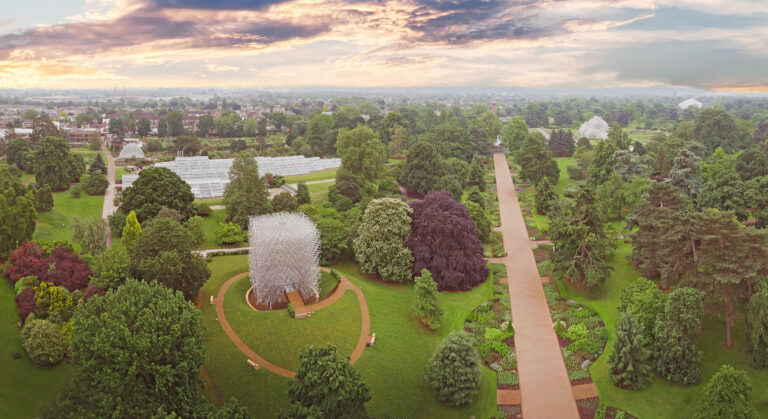
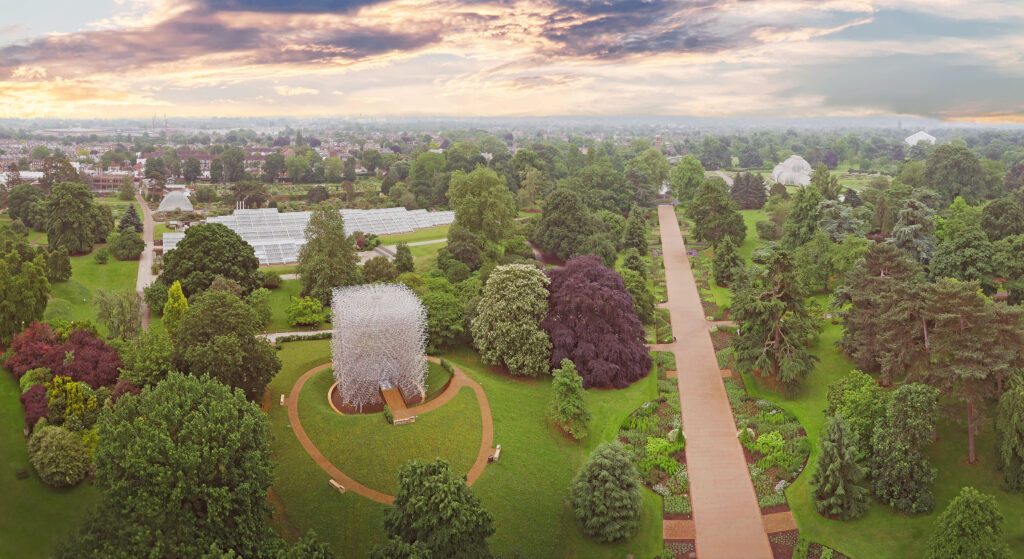
More than half of the 11,000 trees currently found at the 320-acre Gardens in London may be at risk by 2090. That’s one of the key findings of a report published this week by the team at Royal Botanic Gardens.
Kew Gardens sees an average loss of 30 trees most years. The drought of 2022 saw more than 400 trees lost at the site. It lead to the team producing the Planting for the Future: Kew’s Landscape Succession Plan.
The report uses novel climate models, empirically tested by Kew horticulturists and scientists, to determine what species need to be planted now to help protect UK landscapes for future generations.
The team at Kew hope the report will act as a blueprint for urban spaces, botanic, public and private gardens. They’re calling on the horticulture industry, as well as urban planners, to recognise concerns around an exclusive focus on native species.

It’s the first landscape succession plan to be created by a botanic garden in the UK, and, due to the diversity and breadth of Kew’s Living Collection, is considered to be the most expansive landscape succession plan in the world at this time.
The team say there’s an urgent need for ‘succession planning nationally as the UK’s ten warmest years since 1884 have occurred in the 21st century.’ It adds that London’s climate in 2050 is expected to be comparable to present-day Barcelona.
Staff at Kew Gardens say the site is of particular concern as the selection of plants have, in the past, been based on the assumption that site characteristics are static. Historically, species have therefore not been selected with the future climate in mind.
The report’s focus on trees and woody shrub reflects their importance as nature’s air conditioning which effectively manages the effects of urban heat islands – both on people and wider ecosystems.
However, their long lifespan means their ability to adapt to rapidly changing climate conditions are limited – and researchers say that many of the trees currently being planted in the UK are failing.
Researchers used a number of highly effective research techniques to reach their conclusions.
‘Planting for the Future: Kew’s Landscape Succession Plan’
‘Planting for the Future: Kew’s Landscape Succession Plan’ is a crucial, and very timely step towards understanding the effects of the projected climate on our living landscapes, enabling us to implement changes that will make them more resilient,’ says Richard Barley, Director of Gardens at RBG Kew.
‘This is not just about Kew Gardens though; it is a broad call to diversify the plants we select for our landscapes.’
‘By focusing on resilience and adaptability we hope to show it is possible to mitigate the severe impacts of climate change in both urban spaces and gardens such as Kew.’
Additional modelling that combines moisture and annual temperature more conservatively predicts one third of Kew’s trees may be vulnerable by 2090, yet both scenarios reveal much-loved British natives could be at risk in certain areas of the UK.
This includes: English oak, common beech, silver birch and holly. Notably, all of Kew’s ‘Old Lions’ (five of the oldest trees in the Gardens) are expected to thrive even in the worst-case climate scenario.
These trees, none of which are British natives, were planted in the mid-1700s when Princess Augusta created a nine-acre botanic garden at Kew, demonstrating the benefits of diversifying collections.
Kew will continue to model and test as new techniques and data emerge. In the short-term, the team is calling for urban planners to prioritise planting resilient species to replace existing trees as they fail.
These include species which are native to Portugal, Spain, China, Myanmar, Tibet, Central America and Mexico. All of them were found to be plants which could withstand projected climate conditions.
Resilience: sourcing species with similar climate conditions
The team adds that certain species already found in Kew’s collection are shown to be resilient if they are sourced from areas within their geographic range that have similar climates to Kew’s predicted future.
Examples include European species of oak and beech which have developed altered traits as a result of genetic variation within species. This occurs in response to the conditions they grow in, improving resilience to a changing climate.
While we know the English oak will suffer from temperature and water stress as we experience hotter conditions with longer periods of drought, trees grown from oak seeds sourced from locations such as the Eurasian steppe have built-in resilience.
Climate modelling combined with species mapping reveals the Hyrcanian forest of Iran and Azerbaijan, parts of South Western USA and Northern Mexico alongside parts of continental Europe and the Mediterranean together with the Eurasian steppe to be prime locations to source resilient plant material for the UK.
Kew is working with organisations, gardens and research partners internationally to plan seed-collecting trips to these regions.
Beech saplings from a seed collecting trip to Romania in 2023 are already growing in Kew’s state-of-the-art Arboretum Nursery, and will later be tested to determine their suitability for Kew and other parts of the UK. If successful, stock will be shared with other public gardens and arboreta.
Botanic gardens globally hold 30% of the world’s known plants. Experts at Kew say the site is ‘one of the best-suited locations to test these trees of the future, acting as a window into the UK’s future climate.’
Using the plan for inspiration
‘This plan is a statement of RBG Kew’s intention and responsibility. We hope others can use it as inspiration, then revise and improve it where necessary, and through that process it will provide a channel for vital collaboration,’ says Tom Freeth, Head of Living Collection Support at RBG Kew.
‘Fundamentally, we want to raise awareness of what we’re likely to experience over the next 100 years, which will be profoundly different to what we have experienced in the past and showcase some of the steps we can take to address a rapidly changing climate.’
Kew’s Landscape Succession Plan aims to act as a blueprint for urban spaces, botanic, public and private gardens nationally, with the ‘trees of the future’ and geographic areas highlighted can directly influence planting decisions. RBG Kew will incorporate Wakehurst, Kew’s wild botanic garden in Sussex, by 2025.
The news comes after concerns over the impact of climate change were raised by The National Trust after Storm Babet left a trail of destruction in its wake.