Communities ‘devastated’ in Mozambique
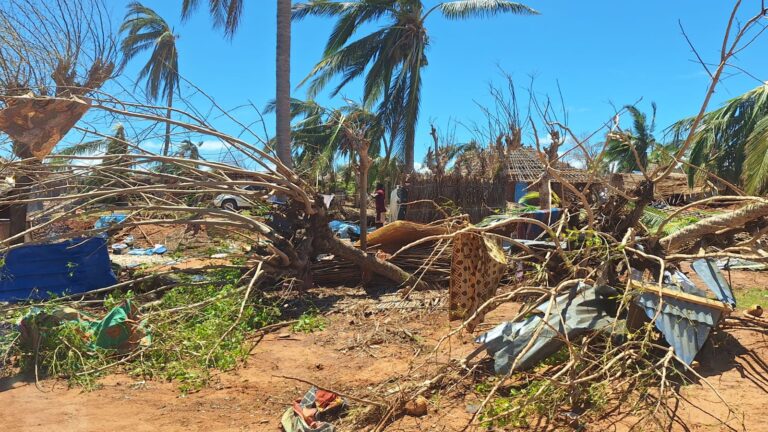
ShelterBox is working in Mozambique to help support communities which were devastated following Tropical Cyclone Chido.
Families uprooted from their homes are being supported by the Cornish based charity – working alongside CARE Mozambique.
The powerful cyclone made landfall on the French Indian Ocean territory of Mayotte before ripping through Mozambique, Malawi, and Zimbabwe.
Powerful winds and heavy rains left many areas devastated, including northern Mozambique which was already home to huge numbers of people. They had been displaced by a long-running conflict in the country.

More than 600,000 people have been affected in Mozambique by the cyclone since it made landfall on 15 December, bringing winds of 260 km/h (160mph) and 250mm of rainfall in 24 hours.
‘People living in Cabo Delgado already face enormous challenges from the ongoing instability and conflict,’ explains Sonja Hughes, ShelterBox’s Programme Manager for Mozambique.
‘Thousands of people have already had to leave their homes and possessions several times to find safety. Now the same people are having to cope with the destruction following Tropical Cyclone Chido.’
ShelterBox has been working in the country since 2021, in partnership with CARE Mozambique. Together, they’ve supported over 96,000 people affected by conflict in Cabo Delago with emergency shelter aid.
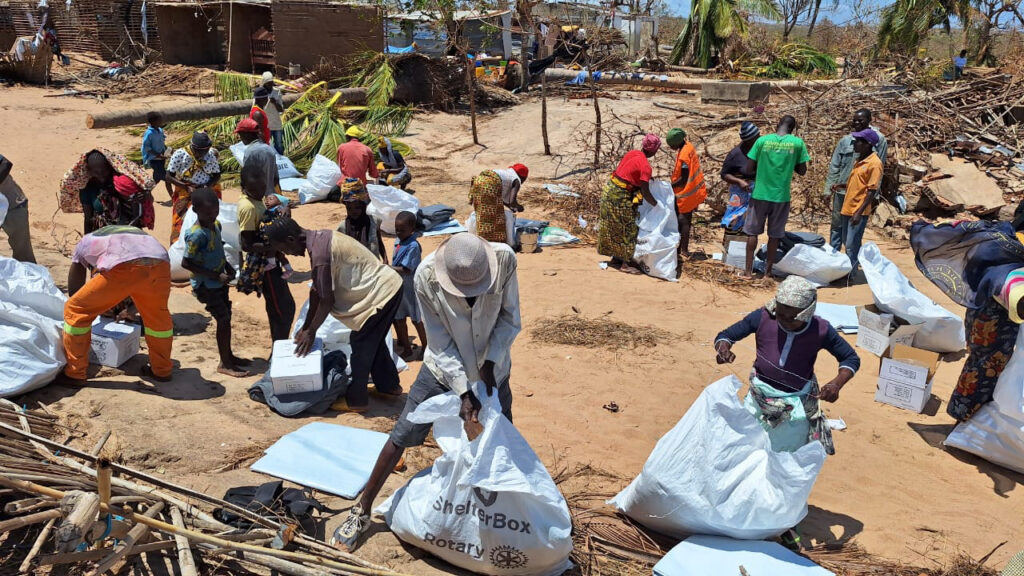
ShelterBox is supporting more than 10,000 people affected by Tropical Cyclone Chido in Mozambique. Image provided by ShelterBox.
‘Supporting more than 10,000 people’
‘Now, we’re supporting more than 10,000 people affected by Tropical Cyclone Chido in Mozambique. For many, what little belongings they did have has been damaged or destroyed during the storm.’
‘Through our partner CARE Mozambique, we’ll distribute thermal blankets, sleeping mats, kitchen sets, mosquito nets, and rechargeable solar lights. This will support people sheltering in communal buildings like schools.’
As extreme weather gets worse, hits the same places more often, and lasts longer more and more people are being displaced in climate vulnerable countries like Mozambique.
Recovering nations and communities that have contributed the least to the climate crisis are facing the brunt of more severe storms and flooding. And that can be exacerbated in countries where there is conflict.
With so many people displaced around the world, ShelterBox is rethinking disasters and changing the way it works, including how it prepares for a response before a disaster happens.
‘We had aid items stored in the north of Mozambique because of how susceptible it is to extreme weather and other disasters. This allows us to respond more quickly, getting aid to people as soon as possible.’
‘We’re using the supplies we have pre-positioned to support some of the worst affected communities in the districts of Mecufi and Chiúre.’
Protecting families from waterborne diseases
Thermal blankets and sleeping mats will mean people can stay warmer at night, kitchen sets will mean families can prepare warm meals and mosquito nets will help protect families from waterborne diseases.
Experts explain that malaria can quickly spread after extreme weather events. Solar lights are also being provided so that families can see when it falls dark.
The scale of damage emerging is vast and the number of people needing support is extremely high. ShelterBox is exploring all options to see whether it’s possible to expand its response and get more supplies into the country in a timely way.
The country was badly affected by Cyclone Freddy in 2023.