
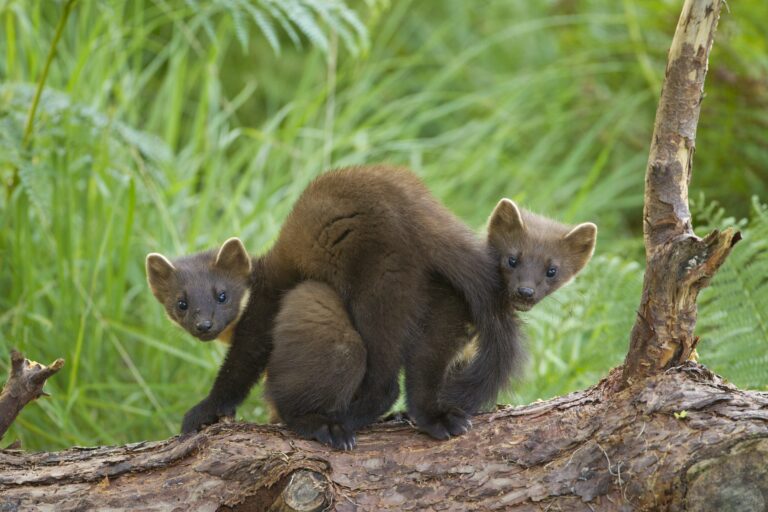
First glimpses of kits caught on camera in pioneering Dartmoor project
Conservationists are celebrating the first births of pine martens following the start of a pioneering ‘re-introduction project’ which is seeing the return of the species to the south west following a century long absence.
Fifteen pine martens, consisting of eight females and seven males, were released at undisclosed Dartmoor locations in autumn 2024. Now camera trap footage has revealed the first glimpses of kits – recorded at a secret site in June this year.
‘When our volunteers discovered the footage of pine marten kits on one of our trail cameras we were ecstatic,’ explains Tracey Hamston from Devon Wildlife Trust.
‘This is a historic moment for the return of a native animal and for the future of the South West’s woodlands.’

‘To have breeding pine martens back after a century’s absence signals a positive step in nature’s recovery. It’s also testament to the many hours work undertaken by the project partnership and dozens of local volunteers.’
Two films show the youngsters as they explore their new home. One clip shows three kits in a Dartmoor woodland chasing each other through foliage and up a bank before disappearing from sight.
A second film shows the same mother with two kits as they scamper along a fallen tree close to a fast-running Dartmoor stream.
The kits are among the first to be born wild in Devon for more than a century. The small cat-sized animals were once common in the South West but fell victim to the loss of their favoured woodland habitat and to human persecution.
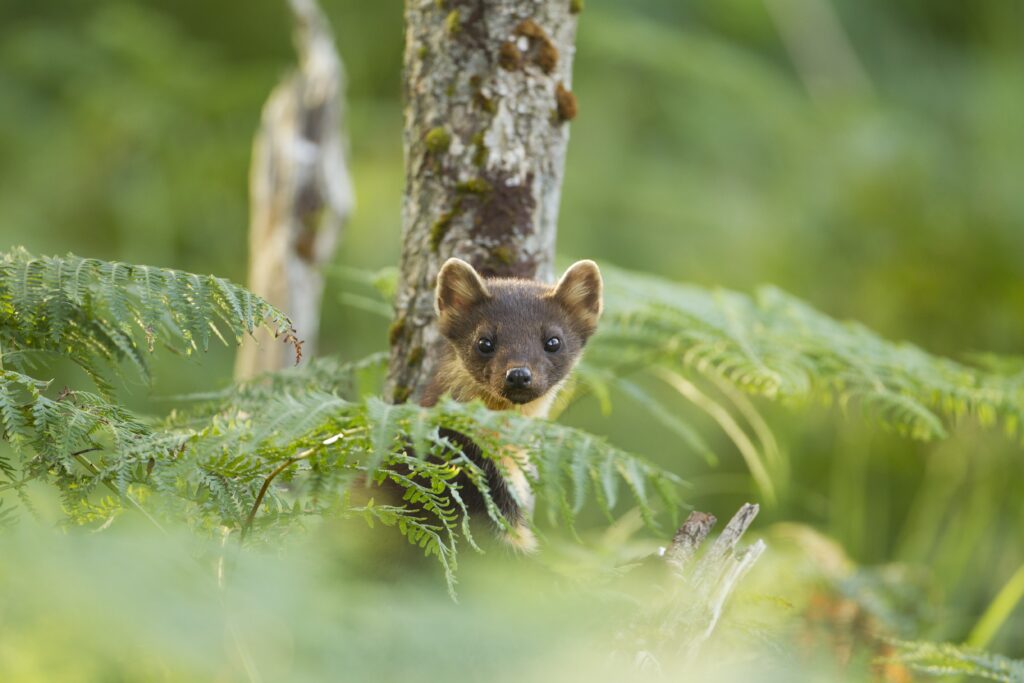
Image: Mark Hamblin, 2020 Vision
‘The beginning of the return of this missing species’
‘Staff and volunteers have been checking camera traps for several months and over the past few weeks have been eagerly anticipating seeing kits. This sighting is wonderful news,’ says Jack Hunt, Woodland Trust (Devon).
‘The work over many years to restore and improve the condition of our woodlands, to support other landowners to do the same and work in partnership on this project has culminated in the return of the pine marten born in its natural environment in Dartmoor, the first of many and the beginning of the return of this missing species.’
The animals have been brought back to the region thanks to the work of the Two Moors Pine Marten Project.
The scheme consists of a partnership of seven organisations, including: Dartmoor National Park Authority, Devon Wildlife Trust, Exmoor National Park Authority, Forestry England, National Trust, Somerset Wildlife Trust and Woodland Trust.
‘Dartmoor National Park Authority is thrilled to have been involved in such a pioneering project, which has brought together multiple organisations to help return pine martens to the South West,’ says Kerry White, Dartmoor National Park Authority.
‘We’re delighted to see footage of the kits exploring their new environment and look forward to the positive impact their presence will have on helping to re-address ecological balance in our woodlands.’
The project has been made possible with the support of The National Lottery Heritage Fund thanks to National Lottery players, and with the expert help of the Vincent Wildlife Trust.
‘The resilience of nature when given the chance to thrive’
‘The birth of the first pine marten kits in Devon in over a century marks a truly historic moment for wildlife recovery,’ says Stuart McLeod, The National Lottery Heritage Fund (London and South).
‘Thanks to National Lottery players, we’ve been proud to support this pioneering project to bring this elusive and charismatic species back to our woodlands.’
‘It has brought together many organisations with one goal in mind, to help nature’s recovery. This milestone is a testament to the power of long-term conservation, and the resilience of nature when given the chance to thrive.’
Evidence that the Dartmoor released pine martens are now breeding follows months of work by the Two Moors Pine Marten Project partnership and its dedicated local volunteers.
Since their release in September 2024, the team has spent hundreds of hours tracking the movements of the 15 pine martens, installing den boxes for them and checking camera traps to learn more about their whereabouts and behaviour.
Female pine martens usually give birth to two or three kits in spring. Youngsters spend their first seven to eight weeks hidden in their dens before emerging in early summer.
They stay with their mothers through autumn and into winter, before becoming fully independent the following spring.
The project’s experts anticipate that the South West’s population should now grow gradually over coming years. Pine martens live at low density and avoid human contact. Their nocturnal habits and elusive nature mean sightings are likely to be rare.
‘A significant milestone’
‘After the years of research, planning and hard work from the project team to deliver a successful translocation, to now see the next generation of pine martens in the South West is simply fantastic,’ says Lucie Bennett, Somerset Wildlife Trust’s Pine Martens Engagement Officer (Exmoor).
‘What a beautiful sight to see healthy kits moving through the woodlands of Dartmoor that they once again call home.’
‘These kits will grow up to do wonderful things as a part of our woodland ecosystem and mark a special moment in history for nature recovery.’
‘The news of the birth of the first Devon wild pine marten kits marks a significant milestone in the return of a long-lost native species and signals a step forward in restoring the South West’s special woodlands,’ says The National Trust’s Loubna Tacey.
‘It shows that these elusive animals are settling in, thriving, and beginning to weave themselves into the fabric of our native woodlands. This is a hopeful sign for the long-term resilience of our natural landscapes.’
‘As a partner to this exciting project, we are delighted to welcome pine martens back and hopefully, we will see kits emerging in the woodlands next spring here on Exmoor.’
The project is now preparing for a further release of animals in autumn 2025. The pine martens are to be sourced under licence from NatureScot from healthy wild populations in Scotland.
‘An exciting milestone for species recovery’
After rigorous health checks by vets, the animals, likely to number around 20 in total, will be released with landowner permissions at secret locations on Exmoor.
‘Forestry England has previously collaborated on successful pine marten releases, so we know that the birth of the first kits following reintroduction is always an exciting milestone for species recovery,’ says Abigail Parravani, Forest Planner at Forestry England.
‘I’m looking forward to watching the Two Moors Pine Marten Project go from strength to strength with the next planned releases on Exmoor this year.’
In recent months the project team has been holding a series of face-to-face and public meetings with dozens of local stakeholders, explaining about the releases and the part the native species will play in healthy woodlands.
“We’re looking to build on the success of last year’s releases of pine martens on Dartmoor. Exmoor’s woodlands are well-suited to the animals,’ says Tracey Hamston, Two Moors Pine Marten Project Lead.
‘Their arrival in early autumn will coincide with the local natural harvest of wild berries – food which pine martens love. In a year’s time we would hope to see the first kits appearing on Exmoor.’
The Two Moors Pine Marten Project is keen to hear from anyone who comes across one of the animals in Devon. The team can be contacted via their website.