
Milestone for Cambridgeshire’s Wicken Fen
It’s believed to be the first UK nature reserve to record 10,000 species within its perimeter and even boasts a moth that can mimic a wasp so it avoids the unwanted attention of predators.
The National Trust’s Wicken Fen hit the total earlier this year when a rare species of moth was recorded on the reserve for the first time.
The six-belted clearwing has a striped, yellow abdomen which mimics the appearance of a wasp – an evolutionary trick which acts as a deterrence against possible attack.
The site attracts plenty of natural history enthusiasts and the clearwing becomes the latest in an extensive line of species which inhabit the area. Wildlife records date back 200 years. During the 20th century, 13 new species were discovered there.

But it is during the last 25 years that records have really surged in number. Experts at the Trust say the boom in wildlife is the result of a major expansion of the nature reserve which began in 1999.
They add that warmer temperatures are causing many insects to move further north so further boosting numbers. Teams are using more sophisticated monitoring methods which means more creatures are now detected compared to yesteryear’s surveys.
‘Reaching 10,000 recorded species is a proud achievement for everyone who has ever taken an interest in this special corner of the country,’ says Alan Kell, Countryside Manager at the National Trust.
‘When the National Trust bought Wicken for £10 back in 1899, it was only two acres in size.’
‘A concerted effort over time to expand, restore and care for it has created this haven for wildlife that is a thousand times the size it was, and we believe, the most biodiverse recorded reserve in the UK.’
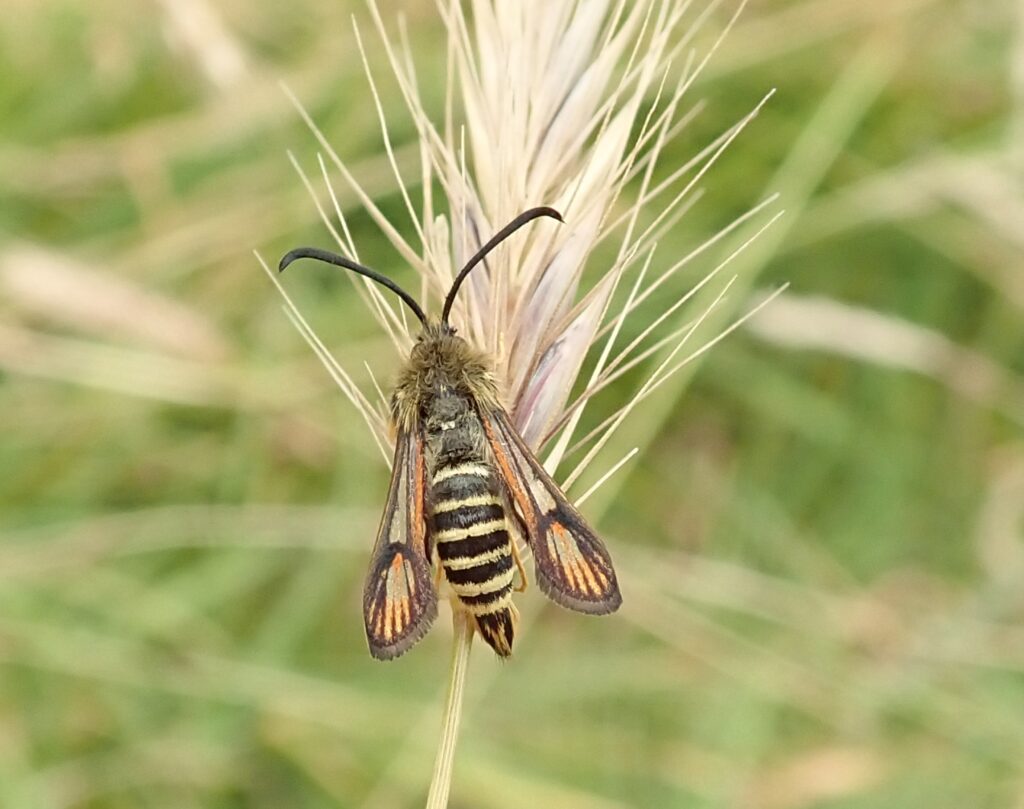
A six belted Clearwing moth: the 10,000th species found on the reserve. Image: © William Bishop / National Trust Images.
‘We continue to restore as much fenland habitat as possible’
The charity hopes species records will continue to climb as it today announces a major partnership with The Nature Recovery Project to help restore vast tracts of lowland peat, both at Wicken Fen and elsewhere in the country.
‘I never fail to be surprised by what we find here, and it is absolutely a case in point that if you give nature the opportunity and the space, it will do remarkable things. It is vital that we continue to restore as much fenland habitat as possible.’
‘To do so we’ll need to work in partnership, including with funders like The Nature Recovery Project, and increasingly beyond the physical boundaries of the reserve with fellow landowners.’
‘The more space we can provide and the more wildlife ‘corridors’ we can create, the greater chance we have of being able to support even more species – especially in this changing climate.’
At Wicken, funding will create new areas of wetland habitat and preserve more lowland peat, as well as support innovative wetland farming techniques called paludiculture.
The addition of nature-rich reservoirs will help manage water levels and support wildlife. It’ll form part of a wider push to turn the UK’s degrading lowland peat soils into thriving ecosystems.
‘The Nature Recovery Project is excited about the opportunity to unite the critical environmental benefits of lowland peatland restoration with a sustainable commercial purpose,’ explains James Berry, Head of Strategy at The Nature Recovery Project.
‘If the project can demonstrate that healthy, thriving peatlands can successfully coexist with profitable food production and nature, we anticipate that this approach could be adopted widely across both existing and historically degraded peatlands.’
‘This would unlock a powerful pathway for stopping emissions from the nation’s largest natural emitter.’
An omega sign at Wicken Fen National Nature Reserve, Cambridgeshire. Image: © Rob Coleman / National Trust Images.
Boosting the area’s abundance and diversity of wildlife
In 1999, the National Trust decided to compile a central checklist of biodiversity as part of its Wicken Fen Vision – a century-long plan to vastly increase the size of the reserve.
With the help of professional and amateur naturalists, the Trust recorded a total of 7,421 species.
Since then, the site has more than tripled in size, from 225 hectares to 820 hectares. Experts say the expansion helped boost the area’s abundance and diversity of wildlife.
Recent finds include the formidable ant beetle, a scarce plant in the pea family called grass vetchling, and the evocatively-titled chamomile shark – a type of moth.
New bird records include a white-tailed eagle that roosted for one night in 2022 and a white stork that was seen several times in summer 2023.
While more than 10,000 different species have now been recorded on the fen, some of them are now extinct at Wicken.
This includes the swallowtail butterfly. Its extinction was due to habitat loss. A loss which provided the inspiration for the Wicken Fen Vision.
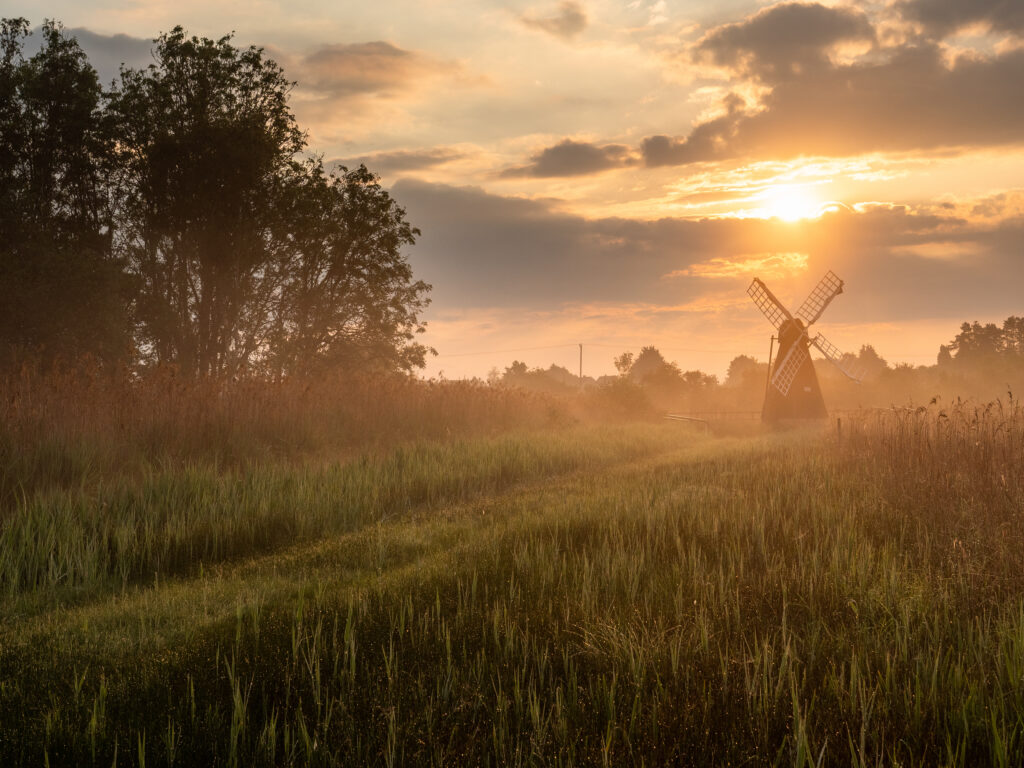
A sunset on Wicken Fen. Image: © Rob Coleman / National Trust Images.
‘Revolutionise our understanding of insect diversity’
Experts say technology is increasingly playing an important role in the recording of species.
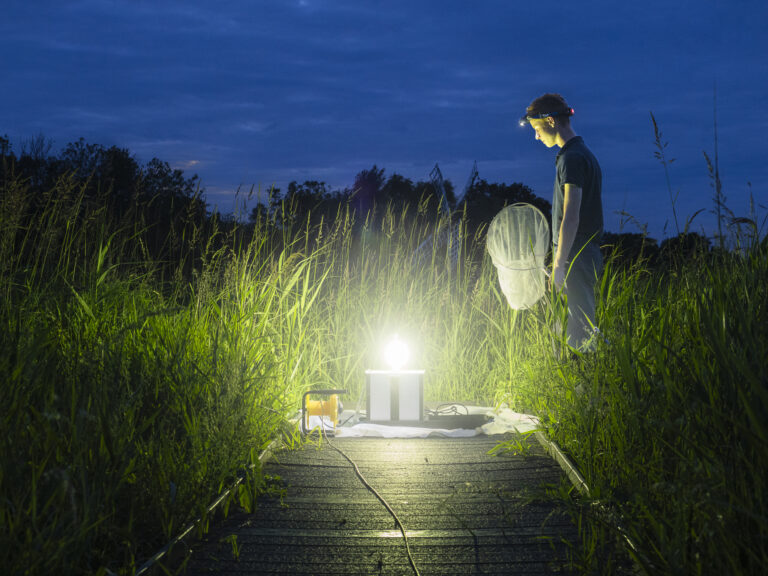
For the last two years, the nature reserve has taken part in The Bioscan Project led by The Wellcome Sanger Institute.
DNA samples of insects found on the reserve, as well as other National Trust sites, are analysed and added to a central database to improve understanding of UK insect diversity and population trends.
‘The Bioscan Project aims to revolutionise our understanding of insect diversity in the UK by using DNA barcoding to identify both known species and species that would otherwise remain unknown to science,’ says Lyndall Pereira da Conceicoa, Bioscan Science Lead at The Wellcome Sanger Institute.
‘Our ambition is to use this approach to track how diversity changes through space and time across the country.’
‘Sites like Wicken Fen, with their rich biodiversity and long-term monitoring, are invaluable partners in creating comprehensive baselines of UK insect species that will inform conservation efforts for years to come.’
Weird and wonderful species at Wicken Fen
The team’s recently produced a list of ‘weird and wonderful’ species found at Wicken Fen (as chosen by Ajay Tegala).
The top ten includes the glow-worm which has larvae that can ride on the backs of snails’ and deliver a toxic bite to paralyze their prey.
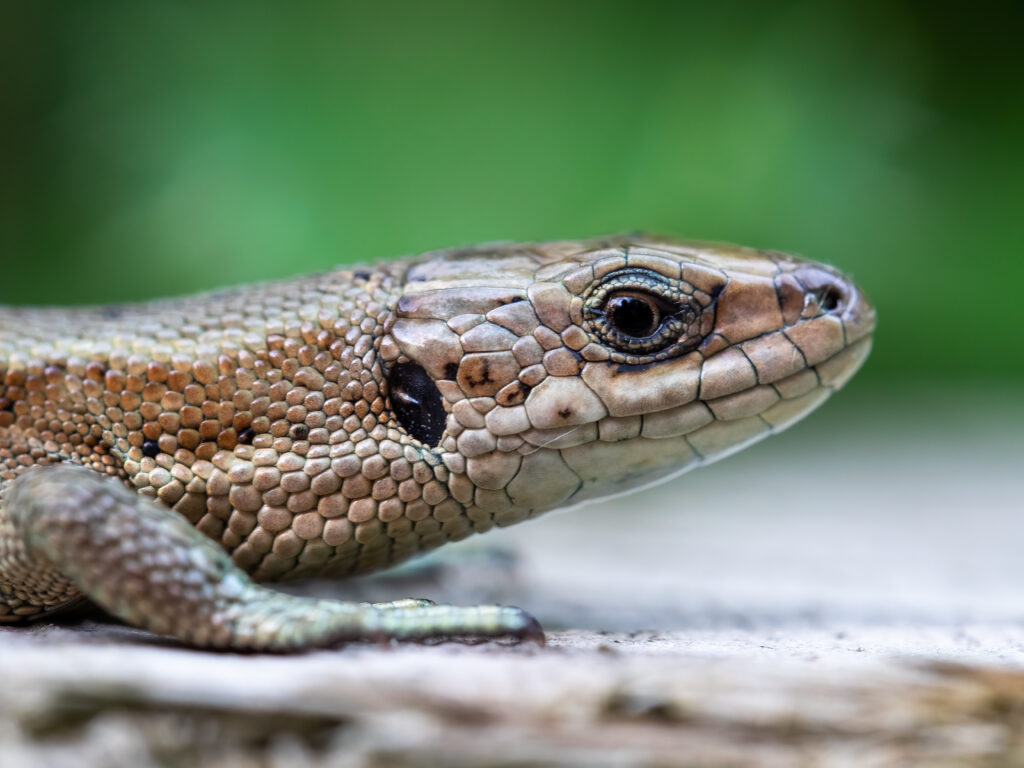
And then, of course, there’s the Common lizard which can shed its still-moving tail in order to distract a predator – so allowing it to make a quick getaway. It can regrow its tail (although it is usually shorter than the original).
Away from the animal world and the fen nettle can also be found at the site. It looks like a common nettle but lacks the typical stinging hairs of other nettles. It has fine, dense, non-stinging hairs (the BTN team’s decided not to be it to the test though)!
And then there’s the Norfolk hawker. Until relatively recently, this dragonfly was only found near the Norfolk Broads, but it has been spreading and now breeds on the Fen.
There were failed attempts to introduce it at Wicken until it decided to move there on its own accord.
Everyone’s favourite is the water vole. Lots of us will immediately think of Ratty in The Wind in the Willows.
They’re Britain’s largest voles and create complex burrows with underwater entrances. They have unique behaviours – such as kicking mud at predators.
Come summer time and Wicken Fen can echo to the sound of the cuckoo. It’s a bird which is good at laying its eggs in the nests of other birds which leaves the host parents to incubate their eggs and raise their young.
Wicken Fen is home to the silver barred moth which can only be found at three other places in the UK with the larvae feeding on just two specific species of grass.
Eagle eyed naturists can often spot the water scorpion in this neck of the woods. It’s not a true scorpion and it uses its tail as a kind of snorkel – rather than a sting.
And then there’s the Greater bladderwort. A carnivorous aquatic plant, its underwater leaves have tiny bladders that create a vacuum to suck in prey, which it then digests. The plant is free-floating, without any roots.
Breaktime News has previously reported on the completion of the Wicken Fen peatland restoration project. Experts say the scheme provides hope for the future – and sheds light on the past.
