
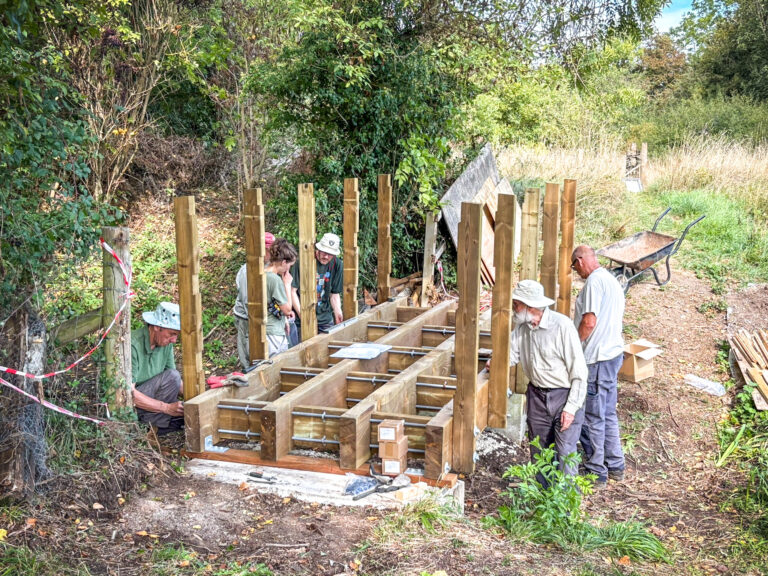
‘It was a physical and logistical challenge’
A team of volunteers got to grips with a problem which had been bugging them for years: how to cut the grass without disturbing the surrounding environment. Their answer was simple: build a new bridge.
And so, volunteers from the Butterfly Conservation’s Hertfordshire and Middlesex Branch constructed the wooden walkway over a seasonal stream at the charity’s historic Millhoppers Pasture site between Luton and Aylesbury.
The area contains 25 species of butterfly and 400 moths. The previous bridge over the brook had been deteriorating for years and was becoming a risk which led to the charity sought funding to replace it.
Its’ application to the Dacorum Shared Prosperity Fund was successful and it was awarded £5,000. The Fund is managed by Community Action Dacorum in Hemel Hempstead.

Chris Hilling, a professional cabinet maker, joiner and site volunteer, had been fixing a previous dilapidated bridge over the brook for years – and was glad to finally replace
‘I’ve done joinery and built staircases but never a bridge: for most of us this was stuff that we’d never done before and it was a physical and logistical challenge, but hugely rewarding,’ says Chris. ‘The team did an incredible job and we’re extremely pleased now.’
Millhoppers Pasture, just outside the village of Long Marston, was bought by Butterfly Conservation in 1998 – it was all thanks to a grant from Dacorum Borough Council and fundraising by residents.
The charity explains the plot is ancient and contains unimproved grassland over three acres which is home to an unusually wide range of butterflies, including: the Common Blue, Marbled White and Ringlet.
It’s also a key haven for 1,000 other species including buzzards, sparrowhawks, hawk-moths and dragonflies. Some hedgerows on the site are thought to date back to Tudor times and a black poplar tree near the pond is thought to be more than 350 years old.
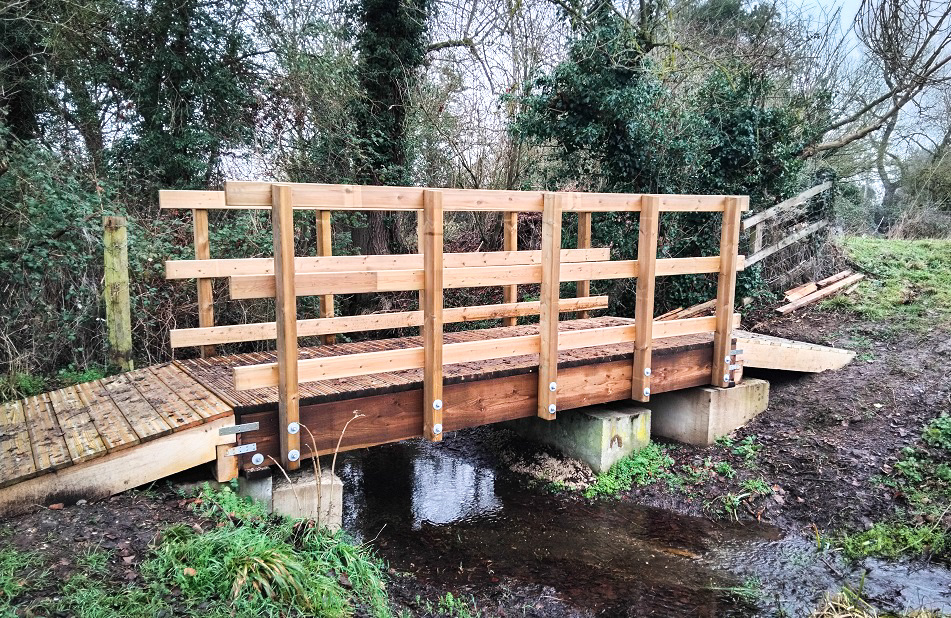
The completed bridge. Image: Chris Hilling / Butterfly Conservation
‘Shows what volunteers can do both for local people’
Perhaps surprisingly, one of the main reasons Butterfly Conservation installed a new bridge was to be able to cut the grass.
In order to maintain the precious grassland habitat, the volunteers regularly trim the open areas using brush cutters to stop it getting overgrown.
As a result, the grass hosts wildflowers such as Cowslip, Knapweed, Devil’s-bit Scabious and Bird’s-foot Trefoil, which attract butterflies and other pollinators.
Over the winter, 11 volunteers helped to bring in materials, prepare the site and build the entire new bridge from scratch.
The new bridge could one day allow the branch to try grazing cattle on the site which is seen to be an effective way to manage grassland for butterflies. In the meantime, it also makes it more accessible for all visitors.
‘I very much enjoyed participating in the project,’ says Chris. ‘It has been a real team effort and shows what volunteers can do both for local people and for Butterfly Conservation.’
Since the 1970s, 80% of the UK’s native butterfly species have declined in abundance, distribution or both. The main cause is loss of habitat.
‘This might only be a little bridge, but it really does transform what this nature reserve can be,’ explains Dave Wainwright, Butterfly Conservation’s Head of Nature Recovery for England.
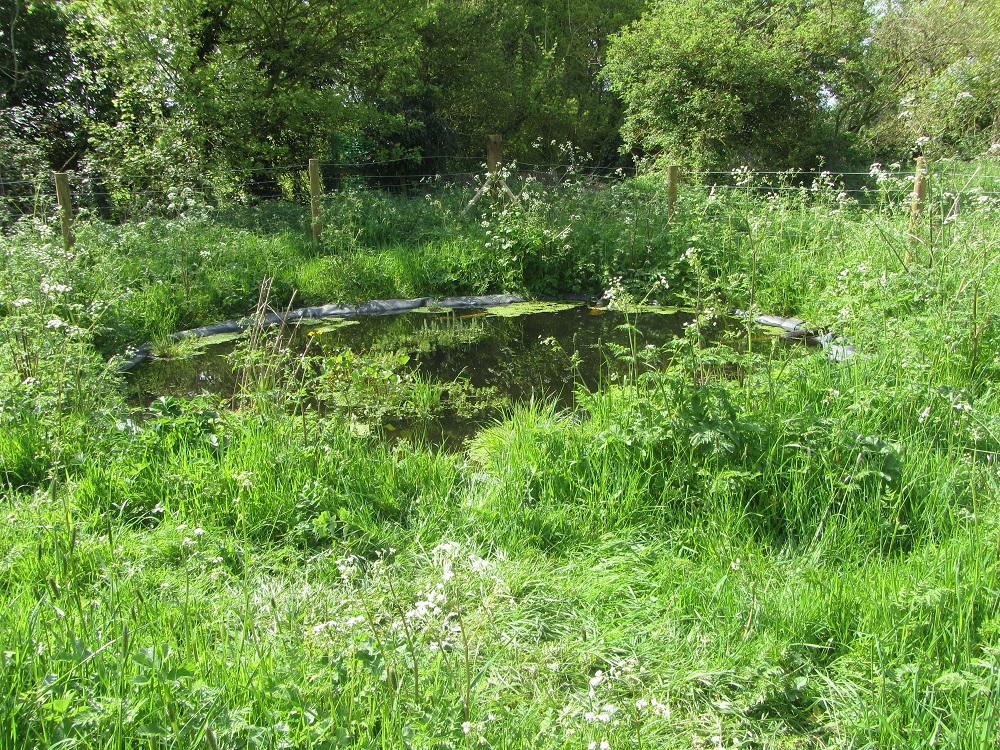
Millhoppers pond. Image: Chris Hilling / Butterfly Conservation
‘Allows people to safely access the entire site’
‘It not only looks a lot better than the battered old bridge, it also allows people to safely access the entire site and get all the benefits of spending time in nature – learning about wildlife, getting exercise or just escaping for a while and getting a bit of mental wellbeing.’
‘We are so grateful to all the fantastic local volunteers who gave their time to make this happen over the winter, and we hope that they and all our other visitors will enjoy the benefits for years to come.’
Breaktime News has previously reported on the Big Butterfly Watch which encourages people to help the charity in its monitoring of butterfly numbers.
