
Scheme includes forensic marking programme for artefacts on underwater sites
Experts are today heralding a significant step in protecting England’s most historic and archaeologically important shipwrecks from the threat of heritage crime.
The nation’s seen a number of high profile criminal cases over the years, including two divers being ordered to pay more than £60,000 in fines and costs in 2014.
They admitted to a string of offences related to the plundering of artefacts from historic wreck sites.
‘This is a leap forward towards safeguarding historic shipwrecks and other important underwater sites for future generations to enjoy. We are delighted that some of our members have led this important project,’ says Paul Jeffery, Chartered Institute for Archaeologists Heritage Crime Special Interest Group.


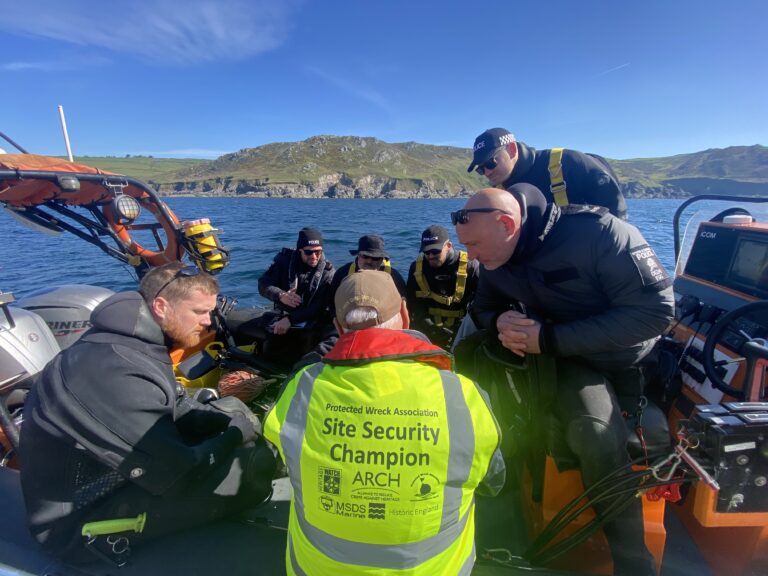
Attendees at the Common Enforcement Manual Launch in February. Image: © Historic England
The new scheme aims to protect England’s wider underwater cultural heritage and is designed to make it easier for law enforcement agencies to detect and act swiftly in response to heritage crime at sea.
‘Responding to heritage crime at sea requires swift action, clear procedures and the secure preservation of evidence,’ says Mark Harrison, Historic England’s Head of Heritage Crime.
‘By strengthening awareness and coordination among the law enforcement agencies patrolling England’s waters, we are enhancing our collective ability to identify offenders, secure crime scenes, and protect historic wreck sites. This sends a clear message that criminal activity will not be tolerated.’
The guidance is being launched by Historic England, in partnership with the University of Plymouth’s School of Law, Humanities and Social Sciences.
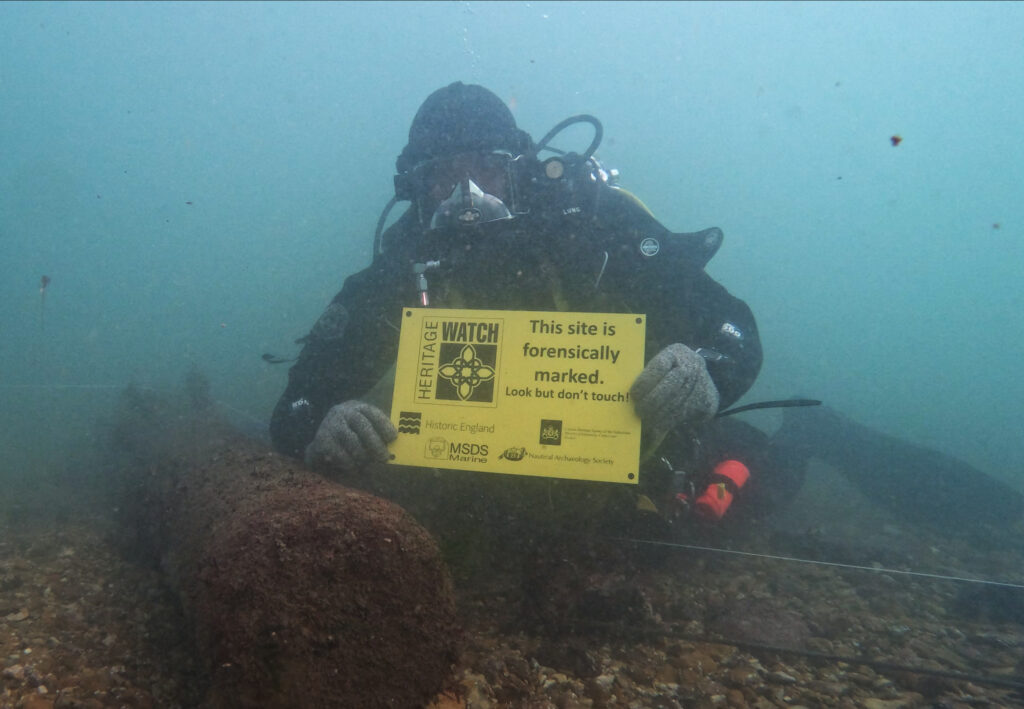
Diver holding an underwater sign indicating that a site has been forensically marked. This means visiting divers can look but not touch. Image: © MSDS Marine.
‘A clear message that criminal activity will not be tolerated’
‘This is truly pioneering work which brings together the knowledge, skills and experience of those involved with enforcement in the maritime heritage crime sector into one place for the first time,’ explains Sgt. Julian Fry, Devon & Cornwall Police.
‘The new Common Enforcement Manual will be a game changer, offering clear and easy to use guidance for those involved in operational enforcement.’
The guidance applies to any form of criminal activity directed towards any kind of maritime heritage in English waters, whether protected by heritage legislation or not.
Its key aim is to make a range of complex legislation easily accessible to frontline agencies in real time.
Supporters of the scheme emphasise the majority of divers abide by the law. They add an unscrupulous minority have caused irreparable damage to historic shipwreck sites, through the removal of material and failure to follow legal requirements.
There are 57 nationally important shipwrecks in English waters designated under the Protection of Wrecks Act 1973.
They range from a scattering of artefacts from the Bronze Age to the wrecks of wooden warships from the age of sail, all the way through to rare submarines from the early 20th century.
