
Three weeks of live programmes scheduled – from two new locations
This year marks the 20th anniversary of Springwatch which is returning to BBC Two and iPlayer from Monday 26 May.
Presenters Chris Packham and Michaela Strachan will be leading wildlife enthusiasts with three weeks of wildlife wonder. And it’s all being based from a new location – the National Trust’s Longshaw Estate in the heart of the Peak District.
Set on the eastern edge of the Peak District, Britain’s first National Park, Longshaw comes alive at this time of year with its upland habitats showcasing a range of species never before featured on the Springwatch live cameras.
New species could include Red Listed ring ouzels and whinchats, which nest on the moorland slopes.

‘This year, we’re at a new site, and that’s very exciting because we’ll be able to focus on bird nests that we haven’t been able to before, like the ring ouzel, the redstart, and the pied flycatcher,’ says Michaela Strachan.
‘But it doesn’t necessarily mean we’ll get those nests, because Springwatch is unpredictable, and that’s what I really enjoy about the programme. It’s the unpredictable stories that nature tells, and then we tell those stories to the viewers.’
In addition, the moorland curlew, one of Britain’s most threatened birds, inhabits these landscapes and the wildlife team will be listening for their distinctive calls hoping to capture rare footage on camera.
Dippers, the world’s only aquatic songbirds, also frequent the estate whilst the woodcock incubate their eggs in the secluded wooded areas. The team also hopes to record the eerie drumming of snipe which circle across the peatland bogs.
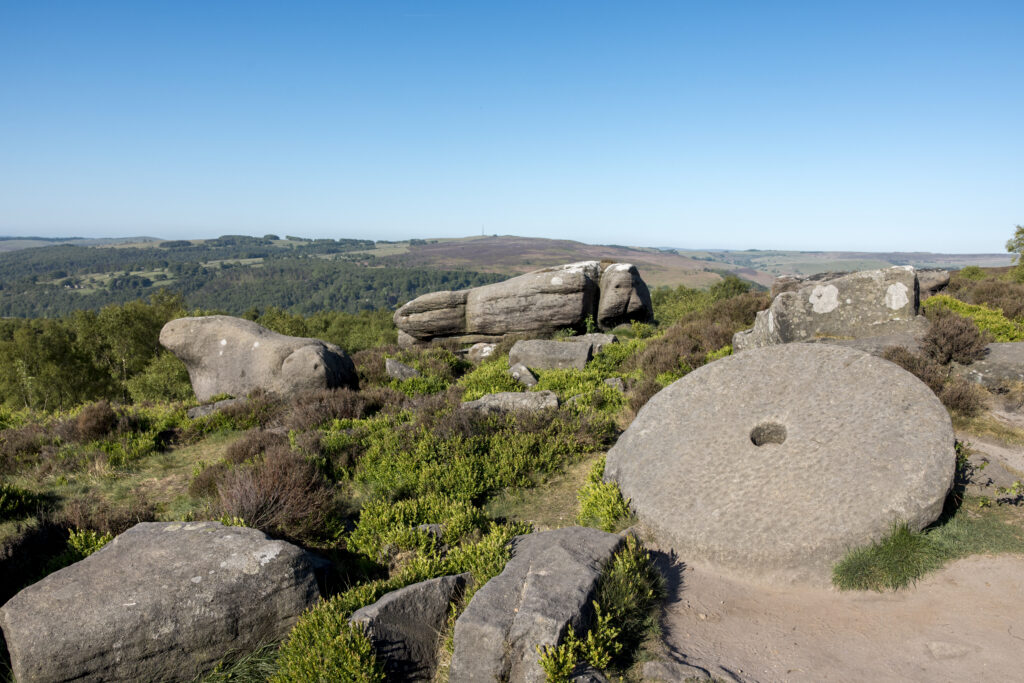
A millstone nestled amongst the heather and gorse on the moors of the Peak District. Photography: Annapurna Mellor / National Trust Imagery.
‘It’s the unpredictable stuff that brings real joy’
‘This year we’re going to the National Trust’s Longshaw Estate in the Peak District, an upland area,’ explains Chris Packham who supports the Big Butterfly Count.
‘The species mix there will be very different from what we’ve been exploring for the last few seasons in the south of England, in the lowland area.’
‘In Longshaw, there are some key species that we’ll be hoping to meet like curlew, merlin, and red start, all of which are very exciting. We’ve not had them on the programme before.’
‘Nests that we haven’t seen before give us a chance to sort of profile those animals and see a completely different life history that we haven’t experienced, and also to talk about any conservation needs that they might have.’
‘And then I think that the very aura of the place will be different, the feel of it. If you imagine it as an oil painting, it’s going to look very different to the one that we might have made in the south of England. It also comes with a local flavour.’
‘The community will be different, which is important because we’re there to represent all of the UK’s wildlife and habitats, which is why we move in the first place.’
‘And it’s going to be the things that will surprise us that are even more exciting. It’s the unpredictable stuff that brings real joy. So yeah, very excited about being in Longshaw.’
‘I’ve never been there, so from a personal point of view, that adds to the excitement, because it’s a new area for me.’
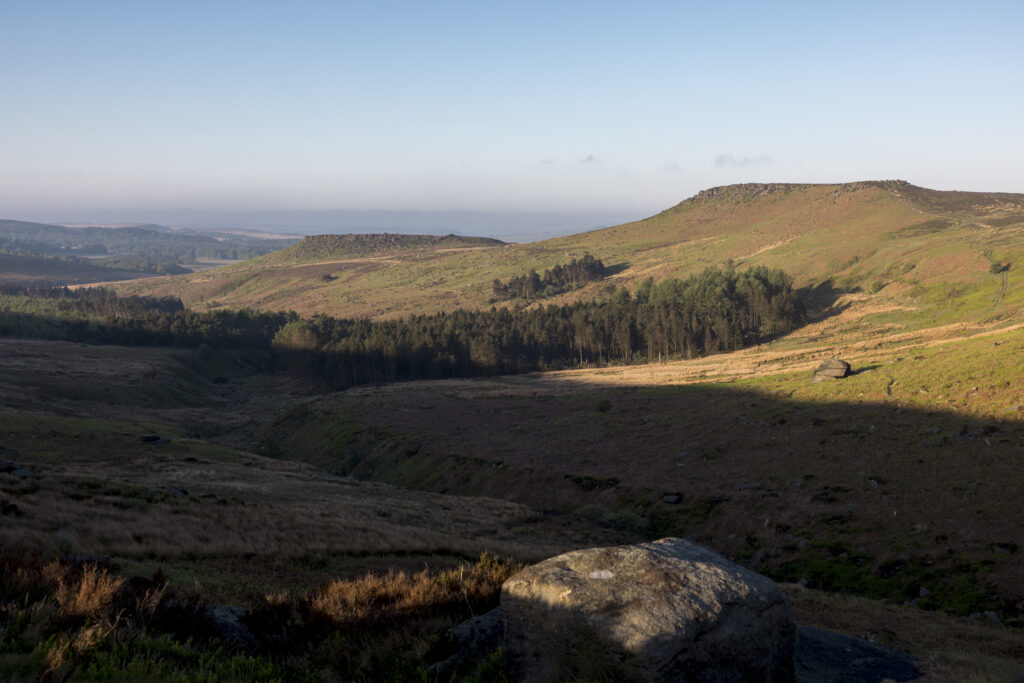
Burbage in the Peak District. Photography: Annapurna Mellor / National Trust Images.
Celebrating the estate’s resident songbirds
To mark the 20th anniversary, the Springwatch team plan to celebrate some audience favourites from the estate’s resident songbirds to the kestrel and barn owls that nest at Longshaw.
There’ll be mammals too: an active badger sett is home to an upland badger clan whilst foxes now use old, disused setts to raise their own families.
Eight species of bat have been recorded roosting within the buildings and trees of the estate so there’ll be plenty of nocturnal activity as the sun sets.
‘We are delighted to welcome the Springwatch team to Longshaw for the 20th anniversary of the series,’ says Craig Best, General Manager at the National Trust in the Peak District.
‘I’m really looking forward to seeing the incredible wildlife you can find in the Peak District become the stars of the show this year.’
‘The woodlands, grasslands, rivers and moorlands here support a huge variety of life and we work hard to care for these habitats to make sure birds, mammals and insects feel at home.’
‘The BBC will be able to bring us fascinating footage of the well-known wildlife characters as well as those we know less about, or that are harder to spot.’
‘Hopefully that will give us a greater understanding and insight into why we need to protect this special landscape.’

Springwatch 20th Anniversary: Chris Packham and Michaela Strachan. Image: © BBC Studios / Olli Hillyer-Riley (provided by The National Trust).
Northern Ireland: a three week trek for Iolo Williams
Iolo Williams will be celebrating Springwatch’s 20th year, with a three-week nature trek through some of the most diverse wildlife hotspots in Northern Ireland, exploring the bountiful wildlife it has to offer as he embarks upon a travelogue.
He’ll start his journey in Northern Ireland’s capital. Despite being a large city, Belfast is home to a surprising amount of wildlife. Iolo will seek out its rich and varied urban characters and meet the people keen to keep Belfast wonderfully wild.
In week two, Iolo will be hopping on the ferry to Rathlin Island, a biodiversity hotspot and Northern Ireland’s most northerly point.
It’s a vital breeding ground for a variety of seabirds and home to endemic species such as the mysterious golden hare. Iolo will also hope to hear the call of the rare corncrake.
At Mount Stewart, Iolo will introduce viewers to a plethora of diverse wildlife during the course of week three.
With 10,000 recorded species, Mount Stewart boasts diverse woodlands, ghost ponds, rough farmland fields, twisting hedgerows, and a tidal lough scattered with green islands.
The cast of characters living in the woodland includes native red squirrels and one of our rarest mammals, the pine marten. Meanwhile charismatic badgers snuffle and play outside their forest setts.
Long-eared owls can be seen drifting over that woodland at twilight, whilst the barn owl, one of Northern Ireland’s rarest birds, is visible along the edges of rough farmland fields, preying on mice and pygmy shrews.
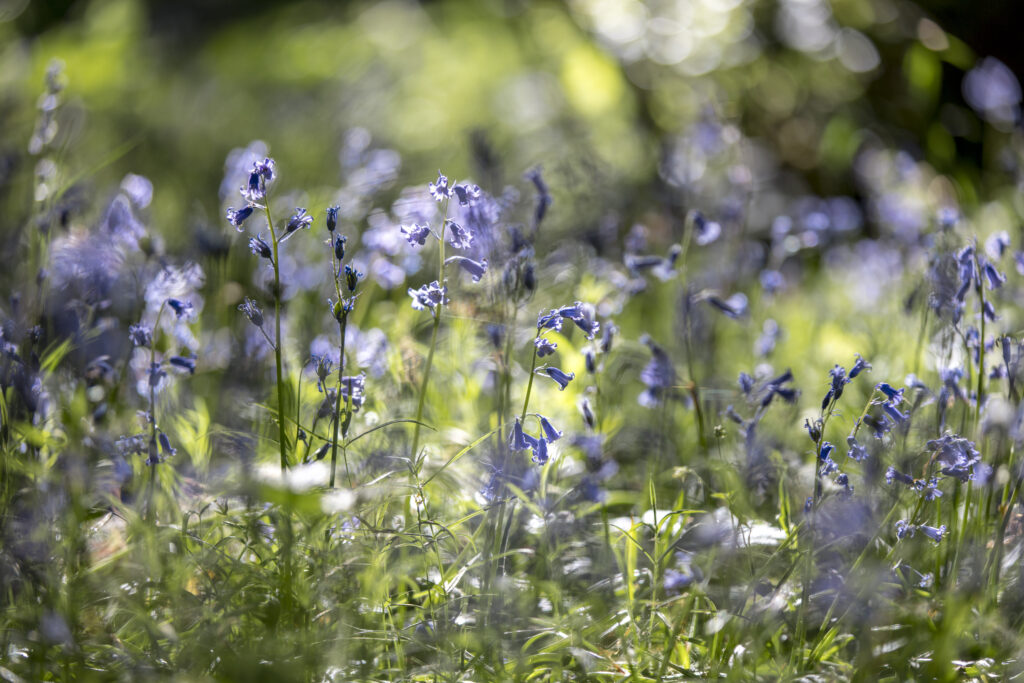
Bluebells in the ancient woodlands on the Longshaw Estate. Photography: Annapurna Mellor / National Trust Images.