‘Now I’m safe when I go out, I can lock the house’
Helping to provide secure shelters for communities recovering from disasters is part of the work being carried out by ShelterBox teams.
The charity is sharing how their expertise is making a real difference for people on the ground as it launches an urgent appeal to raise £50,000 to support its response work across the world.
It explains there are currently more than 117 million people displaced by disaster, conflict and extreme weather events. It adds women and girls are disproportionately affected.
‘Disasters can affect entire communities, but not everyone experiences them in the same way,’ explains Kezhe Temir, Programme Officer at ShelterBox.

‘Women and girls often face increased challenges and risks. They often make difficult decisions like fleeing homes or enduring long journeys to protect their families.’
During a crisis, everyday tasks like going to school, collecting water, food and firewood become harder and more dangerous – especially when communities are scattered.
These types of events mean existing inequalities can deepen. And that can affect access to healthcare and education.
It can also mean being exposed to a greater risk of violence and poverty. It makes it even harder for women to stay safe, get support, and begin to recover.
‘When women are involved in response planning from the beginning, recovery is more effective, inclusive, and long-lasting. Women bring vital knowledge and understanding of their communities, resilience, and support others through crisis.’
‘Maintain dignity and restore safety and hope’
‘With our partners, ShelterBox designs responses with women – and their needs in mind. In every need assessment we check if women and girls face specific risks.’
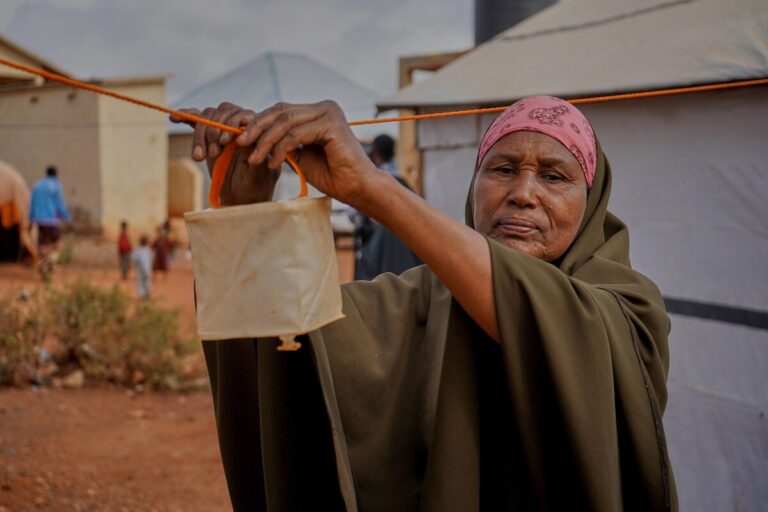
‘And we support in different ways. From private shelters with lockable doors, to solar lights, safe cooking stoves, and reusable sanitary towels – items women want to maintain dignity and restore safety and hope.’
‘And it doesn’t stop there. We work with women, tailoring training and support so they can lead their own recovery, earn money, and understand their rights.’
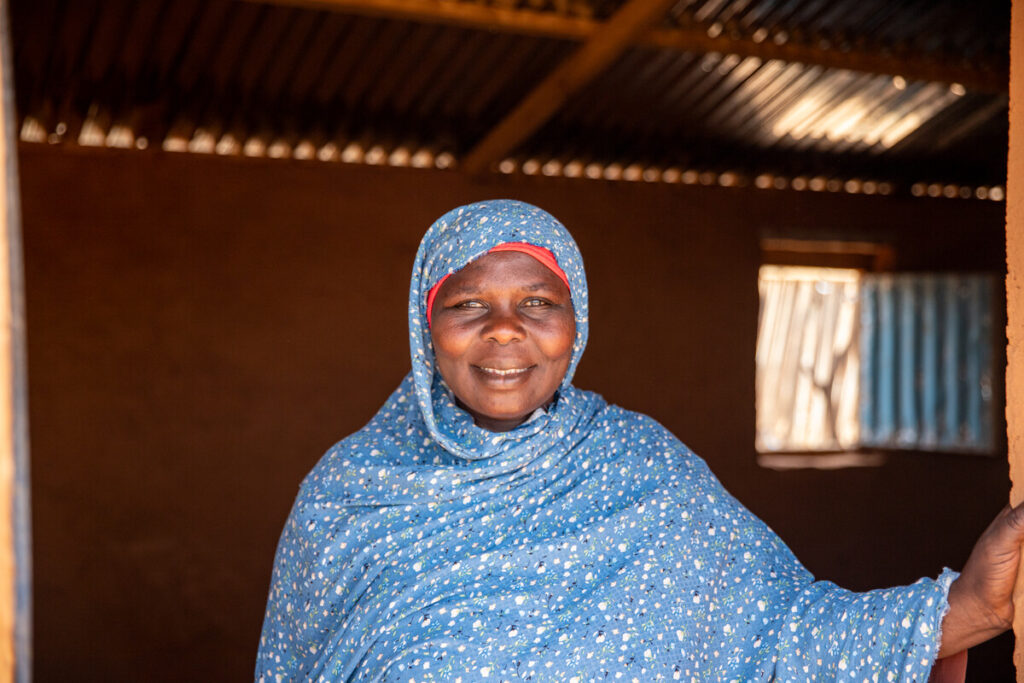
‘Now I’m safe when I go out, I can lock the house, I have water and electricity, which is already essential for me,’ explains Hawa. Image provided by ShelterBox.
Hawa was forced to flee Sudan after conflict made daily life dangerous, particularly for women and girls. After crossing into Chad with her family, she lived in makeshift shelters where fear, fire risk, and insecurity were a constant part of life.
Today, Hawa and her family live in a semi durable shelter built with support from ShelterBox and its partner, Help Tchad.
‘Before, during the night, I would wake up three or four times to check on those around me, but now that the house has been built, I wake up late when the children go to school, they are the ones waking me up,’ says Hawa.
The organisations are working together to transform temporary shelters into semi-permanent shelters, better able to withstand the rainy season, and securing tenancy agreements.
‘Now I’m safe when I go out, I can lock the house, I have water and electricity, which is already essential for me. Before, when I went out, I tried to get home quickly, but now I’m safe, so I go home whenever I want.’
‘Recovery is more effective, inclusive, and long-lasting’
Items like reusable sanitary towels and personal hygiene kits are making a huge difference to women too, like Kindi-Hafti who was displaced with her family by conflict in northern Ethiopia.
ShelterBox and Positive Action for Development are supporting thousands of people who’ve had to flee their homes with shelter materials and other essential items.
Access to sanitary products and underwear is often difficult for women and girls who have been displaced and this can make daily activities more challenging.
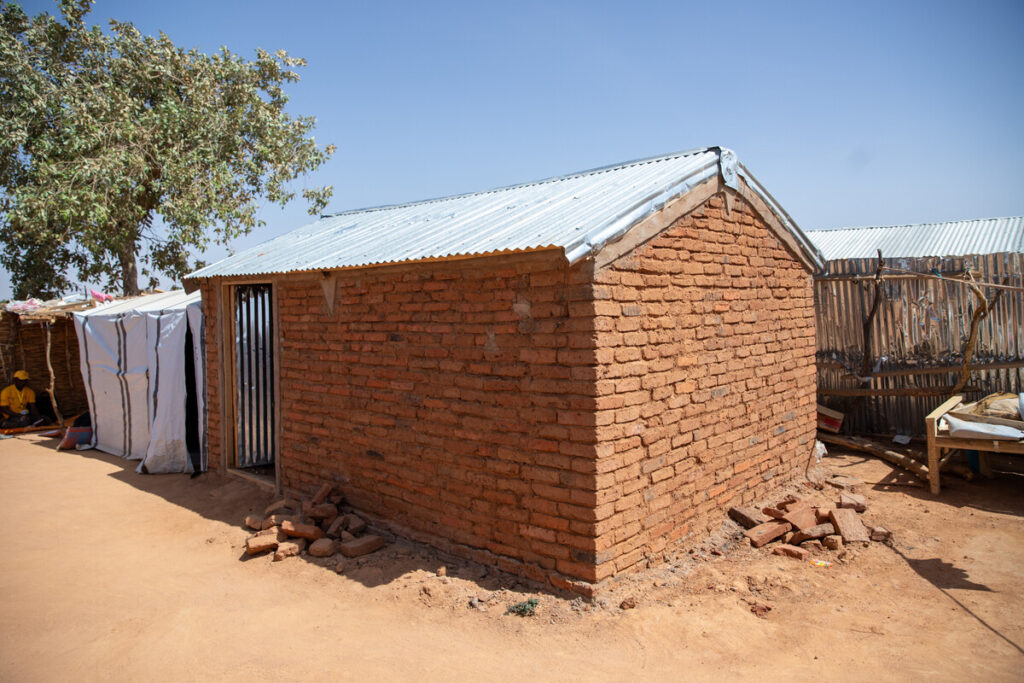
Hawa’s semi-permanent shelter with a lockable door. Image provided by ShelterBox.
During dedicated workshops and feedback sessions with women, ShelterBox and PAD were able to find out what was needed and adapt to make improvements.
‘With both disposable and reusable types, they are excellent if you handle them well. Soap distributions have also been transformative,’ explains Kindi-Hafti.
‘The support has restored not only dignity but confidence. I have the self-confidence now to go out and participate in any public meeting. I can go anywhere without any hesitation or feeling of being less than others.’
ShelterBox explains it’s supported more than three million people in approximately 100 countries.
Breaktime News has previously reported on the 25th anniversary of the founding of ShelterBox.
