
New Cornish attraction: thought provoking and cerebral
It’s a hot sunny day when I drive into the car park at The Story of Emily, writes Duncan Little. It’s busy. Not that you would know it as the site itself is so well spaced out that the full car park doesn’t equate to long queues.
I’ve heard so much about The Story of Emily which first opened its doors a couple of months ago. I feel this is a place where you need to put aside time. A lot of time. Time to absorb. Time to process. Time to reflect.
As you’ll come to see, describing it as a ‘tourist attraction’ would feel inappropriate. As such, I’ve settled on seeing it as an ‘experience.’ It’s divided into two sections. The first is The War Rooms. It’s an immersive experience telling the story of The Anglo-Boer War.
This is a massive building which instantly conjures up a sense of the military. A small side entrance beckons you towards a counter with some very welcoming staff faces.

I remember listening to plans for the site when representatives of the owners gave a presentation in the nearby church at St Ive, near Liskeard. I was amazed at what they were looking to achieve.
And it’s turned out to be even better than the expectation delivered to an audience of a few dozen local people, on one chilly night, in the depths of winter, all those years ago.
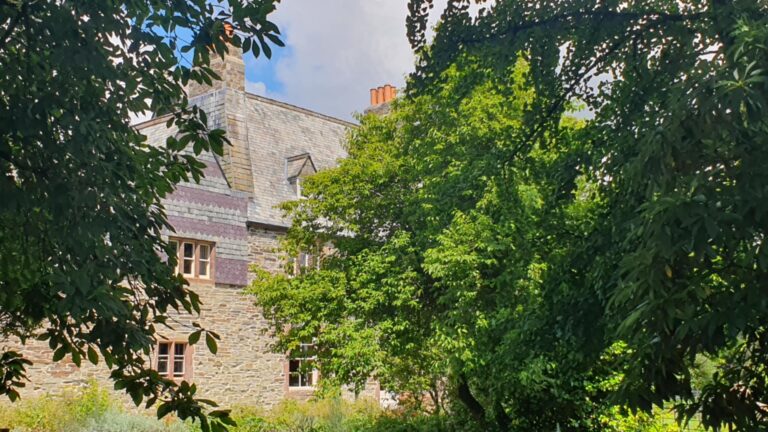
The other section is The Rectory. This was the home of Emily Hobhouse who was born in St Ive in 1860 and lived there until she was 34. She would go on to become a campaigner. A woman who stood against the injustices of war.
My goal was to write a simple Feature about my time at this incredible place. My aim was to provide you with a total of 750 words. Tops. And yet, what I’ve experienced today warrants so more than an article of ‘medium size.’
You could compile a postgraduate university thesis on the many different aspects of this place. The design work. The way it’s laid out. The history. The garden. The food. Where do you start?
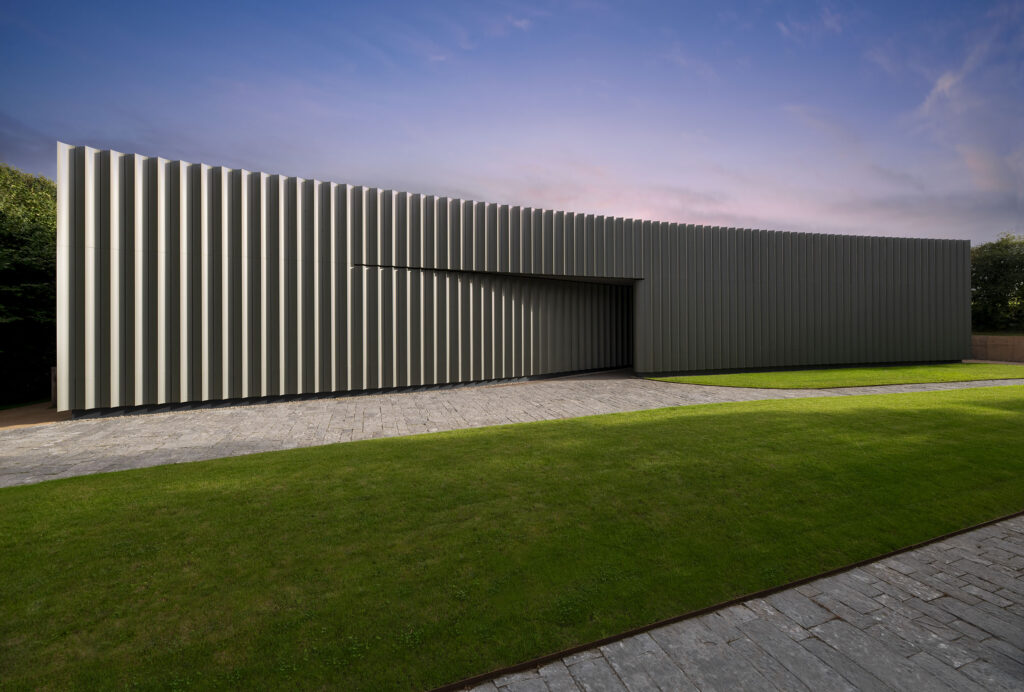
The War Rooms at the Story of Emily. Image: Dook Clunies Ross (provided by The Story of Emily).
Setting the scene
Leaving home in her earlier thirties, Emily heads to America and becomes engaged. The relationship doesn’t last and she returns to England in 1898.
She quickly becomes involved in events happening thousands of miles away in South Africa. Britain and The Boer republics of the Transvaal and Orange Free State are at war. Industrialists in London are keen to mine the gold reserves sited in the country. Former Dutch settlers (Boer) are keen to protect their land.
Tensions grow and the Second Anglo-Boer War starts in 1899 (the first one ended in 1881). The British pour everything into the conflict. Hundreds of thousands of men, alongside similar numbers of horses, are sent into battle.
In many ways, The Boers have the upper hand. Afterall, this is their land and they know it well. And so, the British alter their tactics. Military leaders quickly resort to a ‘scorched earth’ style of warfare. Homes and farms are burned down.
By 1900, the first concentration camps are set up for the women and children of the Boer fighters. Conditions quickly deteriorate and disease becomes rampant. This is where Emily Hobhouse steps in.
She visits the country and starts to document the conditions faced by families in these camps. She sets up the South African Women and Children Distress Fund and even manages to provide supplies to some of them.
Back to the present day setting of Emily Hobhouse’s childhood home and I’m about to embark on a 1 hour 40 minute tour of The War Rooms.
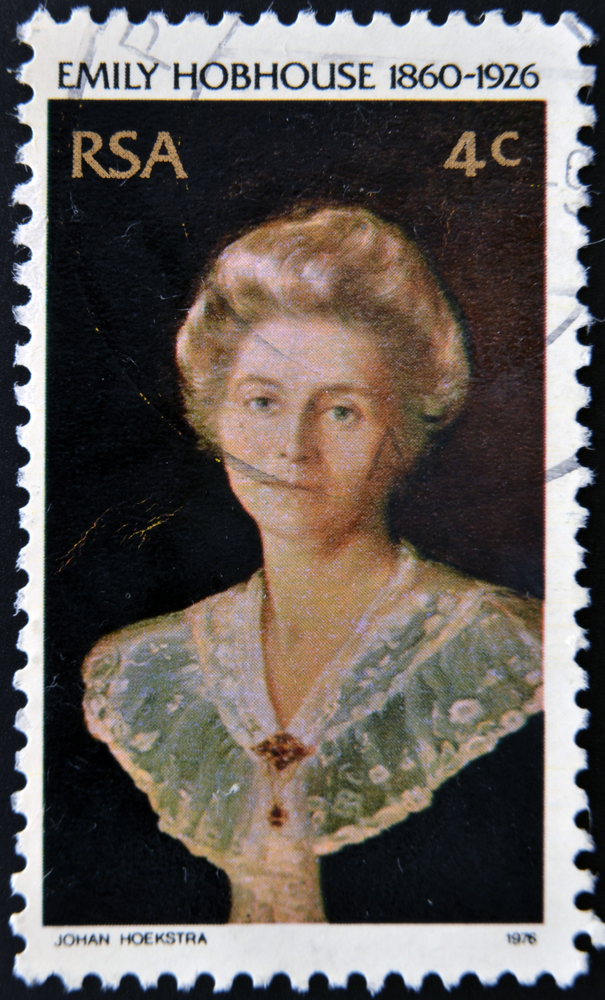
This 1976 stamp shows Emily Hobhouse as a celebrated figure in South Africa. Image: Neftali / Shutterstock.
Immersing us in history
I feel a slight trepidation as Hobhouse has always been a bit of a heroine for me. I first came across her at school.
Perhaps this is a good point to mention that the content in The War Rooms might be considered to contain ‘sensitive content’ in certain parts (a cautionary note if you have small children).
There are six of us on the tour which runs at regular intervals throughout the day. We’re wearing headphones and start our walk with the narrator explaining a bit of the background to how the war starts.
Spoiler alert! If you would prefer not to know too many details about the tour itself then skip to the part which starts with the words: Hand on Heart.
We’re given a bit of background about the build up to the conflict and what a South African 19th Century home looks like. We’re introduced to key everyday characters which will shortly be central to the narrative.
We meet a young Englishman who will patriotically sign up to fight for his country while being completely oblivious to the horrors he’s about to witness when overseas.
We walk onto the veranda of a Boer homestead. It’s presented as it would have been all those years ago. The War Rooms are designed in a way whereby it uses natural light effectively in key parts of the tour.
Cornish clouds cause the sunlight to dapple its way over the plants and wooden posts of a scenescape straight from Transvaal.
We stand and savour authentic 19th Century South African coffee and rusks which I’d describe as hard-baked biscuits. They’re certainly very more-ish!
And yes, the veranda matches the same temperature as South Africa. In short, it’s hot.

Map: ViStock / Shutterstock
The Heart of Darkness
Our headsets direct us away from this bright interlude and into The Heart of Darkness. We’re now heading into the coolness of a quiet kitchen scene that quickly changes as we watch a war unfold around us.
We’re being guided into another room where an eruption of gunfire acts as a backdrop to the narrator calmly explaining how hostilities started – and how guerrilla tactics were used.
The group continues into a dugout. Barbed wire is silhouetted around us and the room is lined various artifacts preserved from the last century. Another section tells us of the fate which awaited horses as they were shipped into battle.
Our ‘guide’ takes us into a sparsely adorned room – and into one of the most powerful interactions of any historical display I’ve think I’ve ever seen. It’s a blank room which explodes into life as we’re introduced to a Boer family.
We’re about to witness what happened to so many people during this brutal conflict. Screens drop down. Screens roll up. The projections of actors appear and disappear.
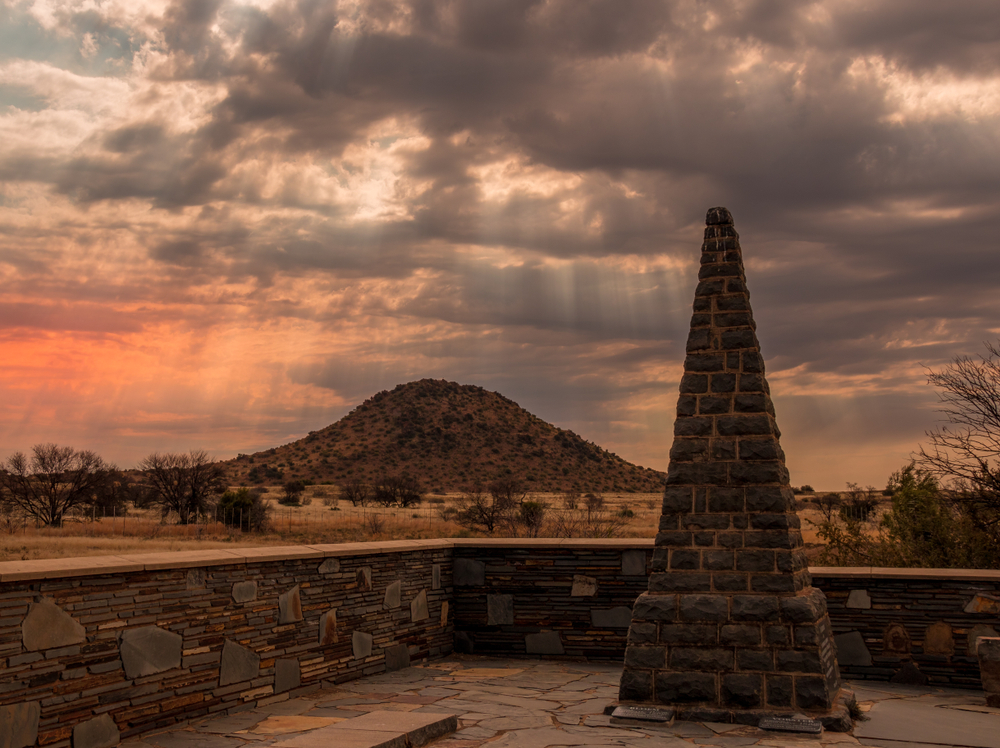
The Norvalspont Concentration Camp Memorial in memory of the women and children who died in the camp during the Anglo Boer War. Image: Richard van der Spuy / Shutterstock
The action is set against the stunning backdrop of South Africa. Our senses are assailed with a constantly changing set of visual stimuli.
Modern technology meets traditional storytelling. We watch as British soldiers arrive and burn down the farm. The young Englishman we met earlier? We liked him then but watching him now and our feelings change…
The acting is exceptional as the imagery shows the farmstead’s trees being chopped down with the resident family being loaded onto the back of a cart so they can be taken to a concentration camp. The haunting look in the young woman’s eyes…
The next few sections of the tour explain the conditions they were forced to endure as Emily’s story continues to interweave itself in and out of the timeline.
The plight of the families
We see what a concentration camp looked like and it’s hard not to be moved by the conditions endured by the people sent there. Nearly 50,000 people died following their incarceration in these places.
A slide sequence includes a projection of a photograph showing the emaciated figure of a small child lying on a bed. Her name was Lizzie van Zyl. She died of typhoid in the Bloemfontein Concentration Camp. Emily Hobhouse recounted her story.
And then the virtual reality headsets are produced so we can really immerse ourselves into what these camps would have been like.
It captures the banality of evil as it shows us how normalised the suffering of these people had become in the eyes of the authorities.
It’s a powerful experience and brings history to life. This is the everyday plight of ordinary people and you’re watching their stories as unfold all around you.
If ever you wanted to encourage a youngster to engage in historical study then The War Rooms will remove them from the sanitised pages of a book and let them step into the shoes of the past.
The tour meanders its way through various discussions in Parliament and the latter part of Hobhouse’s life leading up to her death in 1926. The final few parts of the experience left me with a lump in my throat and tears forming in my eyes.
As I said earlier, the acting is excellent and the manner of presentation makes you feel as if you’re a ‘fly on the wall’ watching the passing of one of Britain’s greatest, but, perhaps, least known campaigners.
We see a physical replica of The Women’s Monument in Bloemfontein which was set up in the memory of the tens of thousands of women and children who died in the camps.
Her ashes are ashes are in a niche at the foot of The Women’s Monument. We watch The State Funeral of Hobhouse in South Africa (her death was largely unreported in Britain).
The tour also shows us the powerful positive impact created by her establishment of spinning and weaving schools across the country. There was also a lace school. These places allowed women and children to learn new skills and earn a living to assist in their recovery from war.
The natural light streaming through the windows above us highlights the colours within the textiles and provides a powerful juxtaposition to the spiritual darkness of war. As an aside, the room contained copies of her watercolours from her time in South Africa.
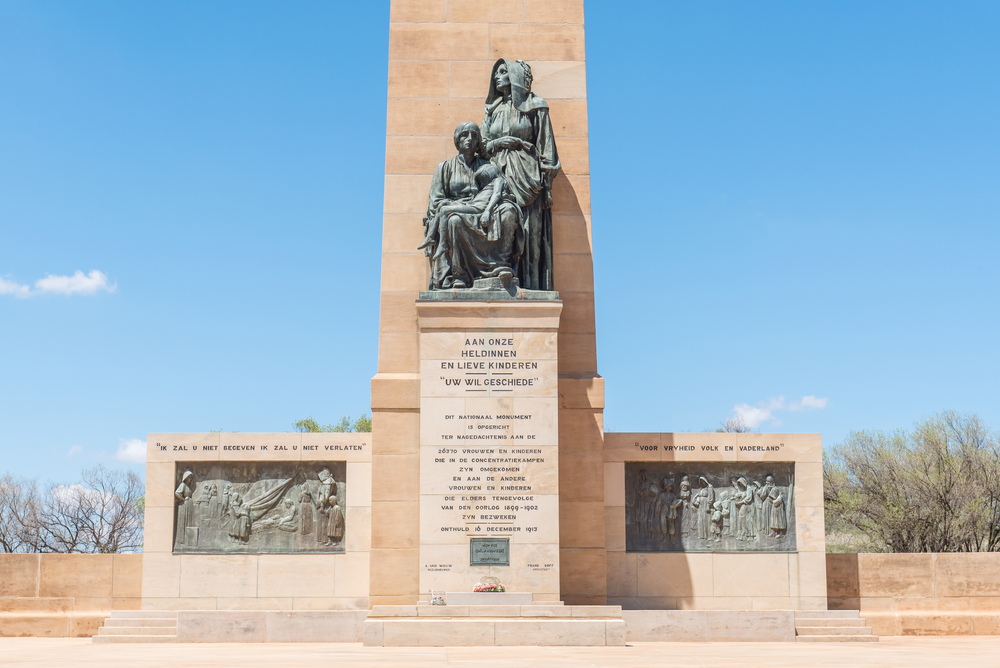
The National Women’s Memorial Monument in Bloemfontein. Image: Grobler du Preez / Shutterstock
‘That Bloody Woman’
During The Anglo-Boer War, Kitchener described her as That Bloody Woman. Having returned to Blighty, she decided to raise awareness about what was happening.
Even before her journey to South Africa, her campaigning caused controversey. In nearby Liskeard, the Town Hall erupted into chaos when she took to the stage.
Her speech was drowned out by the furious cries from local people whose families were fighting in the South African conflict. Chairs and objects were thrown. Chaos insued.
Her fellow speaker was future Prime Minister, David Lloyd George. Both were quickly ushered out of the building before serious injury occurred.
Her campaigning didn’t stop in South Africa. The First World War saw Hobhouse reach out to try to help the women and children of Germany. Her work often made her few friends.
Hand on heart: I think this is probably the most cerebral historical experience I’ve undertaken. I cannot think of something which captures the whole essence and atmosphere as well as The War Rooms at The Story of Emily.
And yet, at around the 1800 word mark, I’m only halfway through telling you about my time there. You leave The War Rooms and blink as you start to re-engage with the outside world.
It’s not just that your senses have been assailed for the past 90+ minutes but more because there’s so much information to digest. And so, I gently make my way over to the restaurant which overlooks The Victorian Garden.
There’s an abundant supply of plants from the era. Your eyes are naturally drawn up a slope that leads us to a stunning conservatory.
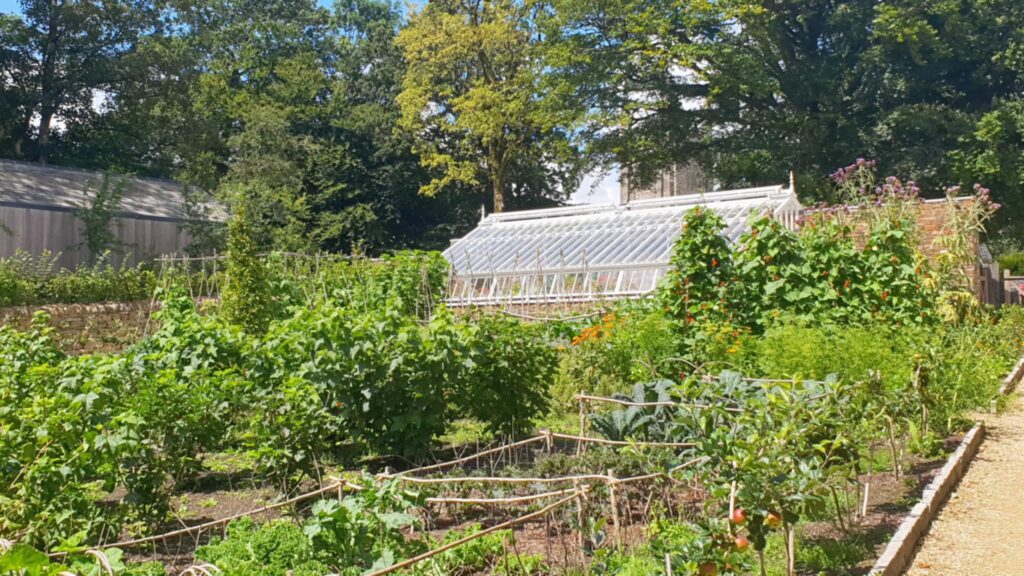
Image: Duncan Little
From my vantage point, in the restaurant, the scene is beautifully framed by a window which turns out to be the largest single pane of glass in the whole of Europe.
I settle myself down and start to go through the menu. This is authentic 19th century South African food.
What you’re about to eat and drink is going to be exceptionally close to what Emily would have consumed when she was on the continent (something shared with us on our walk around The War Rooms).
The food is titled in Afrikaans with English descriptions telling you a bit about the background to what you’re eating.
It’s a nice touch and I recommend the Ouma Onder Die Kombers (Grandmother Under the Blanket). It’s a traditional Cape dish consisting of cabbage and meatballs.
It’s a peaceful place to sit and watch the butterflies as they interweave between the plants of yesteryear.
With plenty to eat and drink, I make my way towards The Rectory and the place of Emily’s childhood.
There is a real sense of prescience when you step through the doors and into the pantry. You feel as if you’ve stepped back in time.
Natural light will play a hefty role in your guided tour of the house.
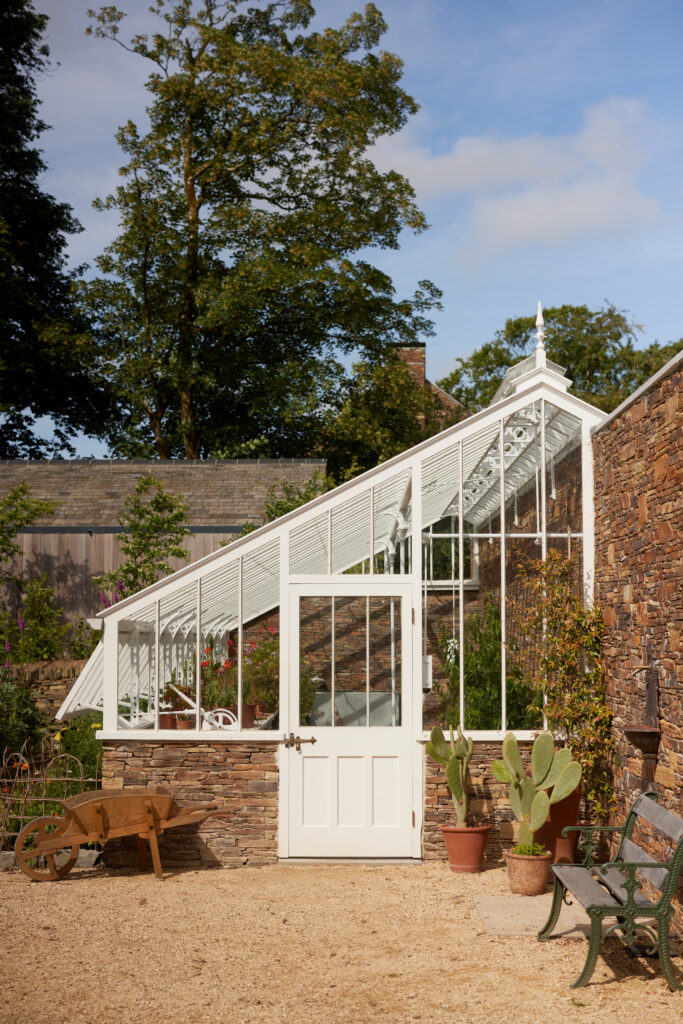
Image: Ed Schofield (provided by The Story of Emily)
The Rectory – and beyond
It’s a place where the research team deserve a huge amount of praise as they even managed to match the type of wallpaper which would have originally adorned the walls in some of the bedrooms.
The opulence enjoyed by the family was a far cry from the poverty of the nearby villagers. And, perhaps, this is when Emily first discovers her sense of injustice for others.
Today was a day when I reached out to touch history. Today is also a day when history reached out to touch me – and found my heart.
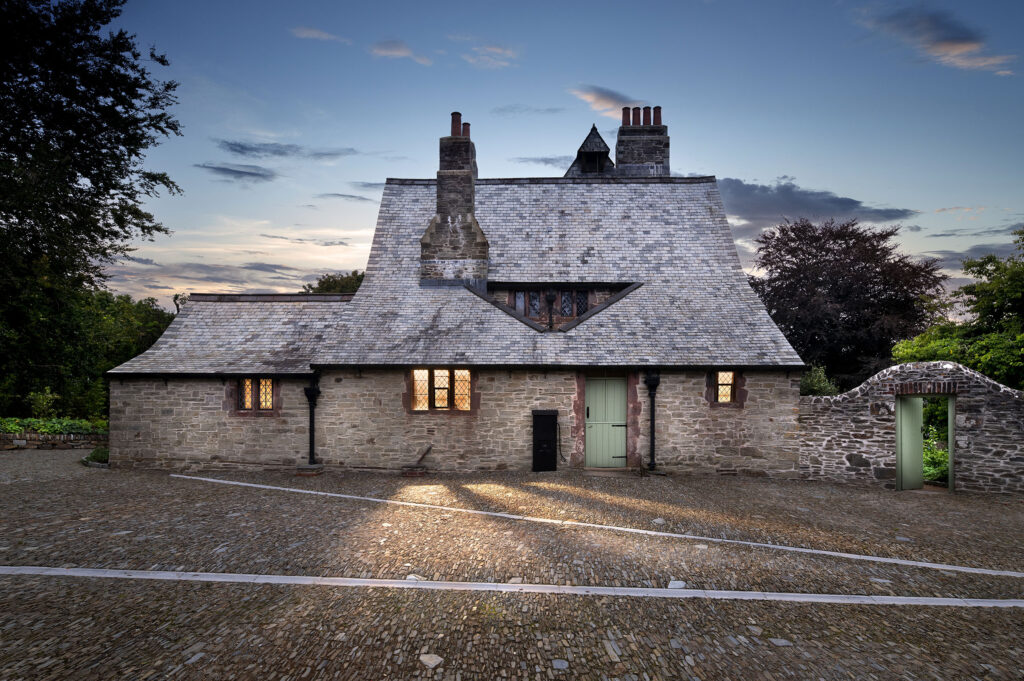
Image: Dook Clunies Ross (provided by The Story of Emily)
Outstanding value for money
The Story of Emily is at St Ive, near Liskeard. It’s worth every penny of the £25 adult entry price (£12 for children between five and 17).
I’d recommend upgrading your ticket to an annual pass (£35) as I feel fairly confident in saying you’ll want to return. Again and again. Take a look at the website for full pricing details.
This is a place where you could arrive in the morning and still find yourself engaging with its content at the end of the day. If you have even the slightest passing interest in History then this is a site which is an absolute must see.
Perhaps it’s not surprising that our Editorial Feature awards a top rating of Five Stars to The Story of Emily.
Afterall, it’s been created by the same team behind The Roman Villa Experience at The Newt in Somerset.
This article was first published on Breaktime News on 01 August, 2025.