
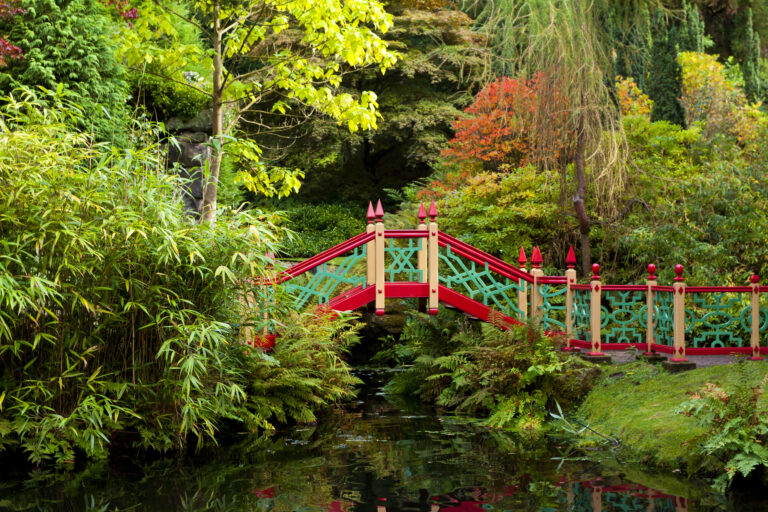
Experts hope for drawn out autumnal colours for leaves
The National Trust says its rangers and gardeners are preparing for a ‘mixed bag’ of autumnal displays across gardens, parklands and woodlands in England, Wales and Northern Ireland. And it’s all due to the cool and wet conditions preceding the yearly spectacle.
This year’s seen parts of the UK experiencing higher-than-average rainfall and a cooler than average summer.
Experts say the weather’s helped to sustain trees throughout the year with hopes remaining high for a ‘dazzling colour display’ as trees have been able to hang on to their leaves for longer.
However, tree crowns remaining at ‘full sail’ also increases the threat of damage caused by autumn storms. The charity says this year’s weather conditions are also proving troubling for traditional autumn vegetable harvests.

Now, after an unsettled start to the season, the conservation charity is watching the weather closely to see how autumn colour might unfold and which seasonal delights visitors might be able to catch.
‘As the predictability of weather patterns continues to alter due to a changing climate, the timings of a traditional autumn with its colourful canopy displays become less certain,’ says Pamela Smith, Senior National Consultant for Gardens and Parklands at the National Trust.
‘We’ve seen a real mixed bag of conditions so far this year – particularly the soggy start, but if we see a gradual drop in temperature along with more settled weather, we could expect to see a drawn-out display.’
‘However, if we get sharp, hard, frosts or see further wet weather with storms, heavy rain and wind roll across the UK, that may cut any extended show short.’
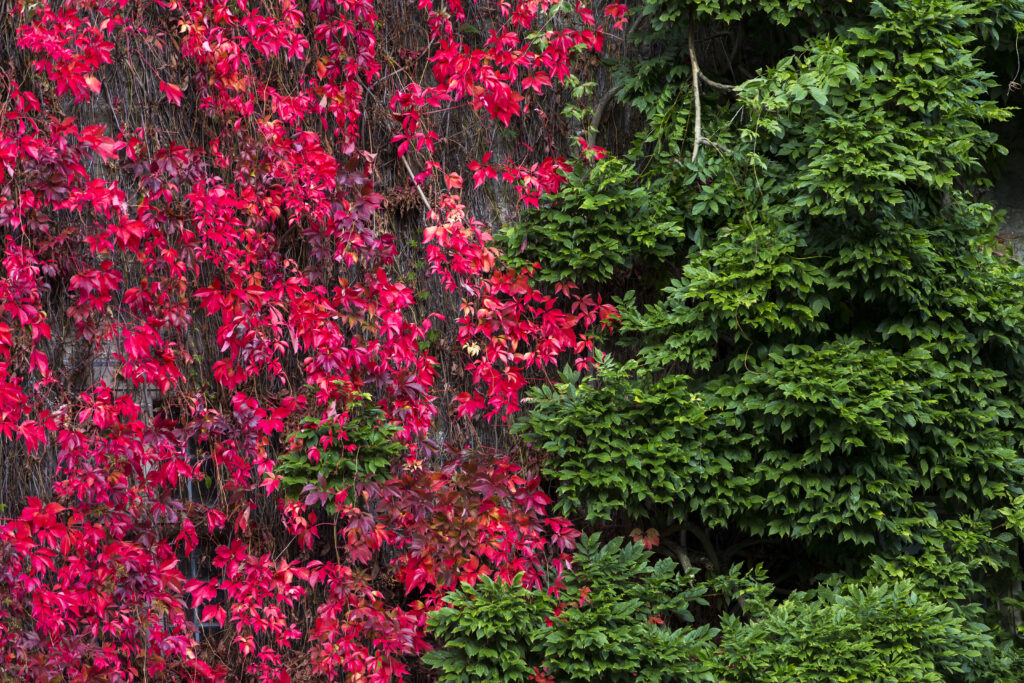
Impactful and colourful displays
Triggered by falling temperatures and changes in day length, deciduous trees and shrubs start to shed their leaves in autumn ready for the winter ahead.
The variety of colour they turn before dropping is revealed by the disappearance of chlorophyll, the green pigment in leaves.
Environmental factors also play their role in the process (including sun, temperature and moisture levels). Sunny days and cool nights make for the most impactful and colourful displays.
One of the consequences of autumn taking longer to develop and trees holding onto their leaves longer is the additional threat of damage from storms.
‘In our management of both woods and ancient trees, we are worried about the impact of experiencing more storms when the trees are in leaf and catch the wind more, potentially causing more damage than these important habitats and trees can sustain,’ says Luke Barley, National Trust Senior National Consultant for Trees & Woodland.
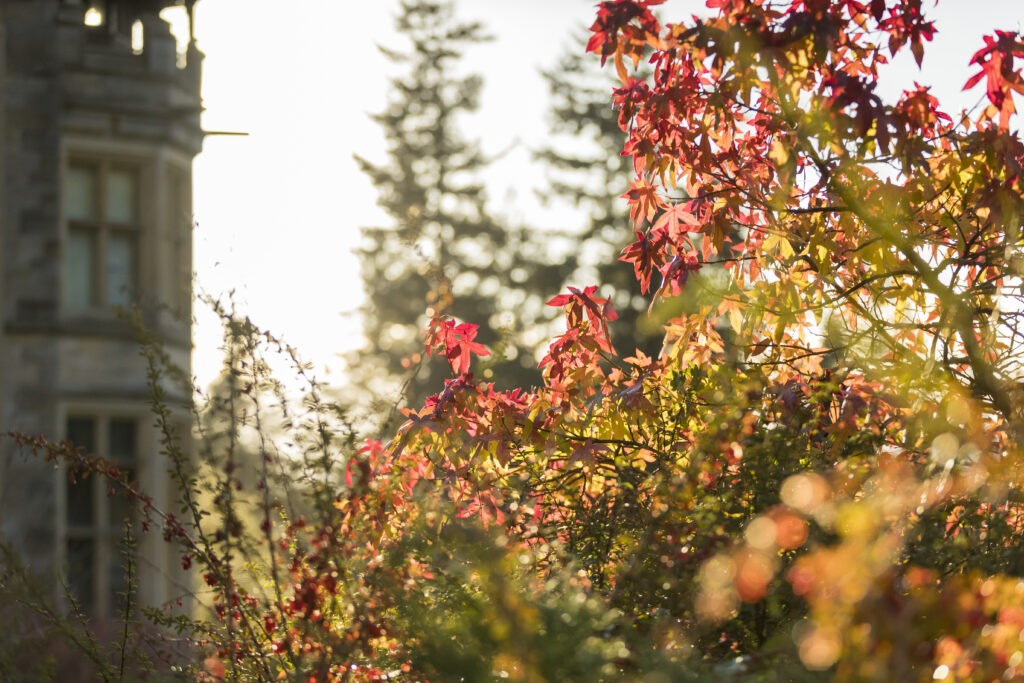
The beauty of autumn at Cragside, Northumberland. Image: National Trust Images / Chris Lacey.
‘The past year has seen the most named storms since the naming system began in 2015, and the impact of this increase in severe weather events is unavoidable for National Trust foresters and woodland managers.’
‘The constant alternation between extreme waterlogging and drought in the soil stresses trees, and we see the signs of this effect on their rooting environment everywhere in reduced health in their crowns.’
‘But it’s not all bad. The winds themselves have a variable affect: on the one hand, damaged trees can cause inconvenient disruption where they fall on roads and paths, or where swathes of plantation are blown over.’
‘But on the other hand, storm damage in our native woods is a natural process and can create some of the chaotic, thrilling dynamism that much woodland wildlife needs to survive.’
‘We also look after more ancient trees than any other landowner, and while storms can affect them, they’re often better able to resist them than taller, younger specimens – a reminder of their resilience but also of our responsibility for them in their great age.’
Pruning vulnerable trees
To mitigate these challenges, arborists at some National Trust estates, such as Chirk Castle near Wrexham, carry out conservation pruning on vulnerable veteran and ancient trees to carefully reduce their crown.
Their goal is to try to make them less likely to fall or break in higher winds. Other sites, such as the Oxburgh Estate in Norfolk, are further adapting their woodland planting to account for increasingly high winds and manage damage done to the trees.
As weather extremes become more commonplace, many National Trust gardens, such as Sheffield Park in East Sussex, with its prized collections of champion trees, are also busy future proofing collections to ensure many future years of autumn colour.
‘We are seeing the seasons shifting later and plants being put under more stress, which makes autumn colour less easy to predict,’ says Jodie Hilton, National Trust Head Gardener at Sheffield Park and Garden in East Sussex.
‘To monitor this at Sheffield Park, we’ve installed data collectors across the garden to understand our microclimates and help inform future decisions around planting and experimentation.’
‘We have had our tree and shrub collection climate mapped, which means we can start to understand the survival potential of our species over the next 50 to 100 years.’
‘The interventions we are making now such as thinning and soil improvement will hopefully ensure the longevity of our stunning garden for years to come.’
But despite the mixed weather, there is still plenty to admire this autumn. Birch, beech and lime trees in parklands, woodlands and estates cared for by the conservation charity are slowly starting to feature a sprinkling of gold and yellowing leaves.
Change of season taking hold across NT’s land
At Lanhydrock, in Cornwall, the beech lined east avenue has begun its transformation into a mass of copper tones.
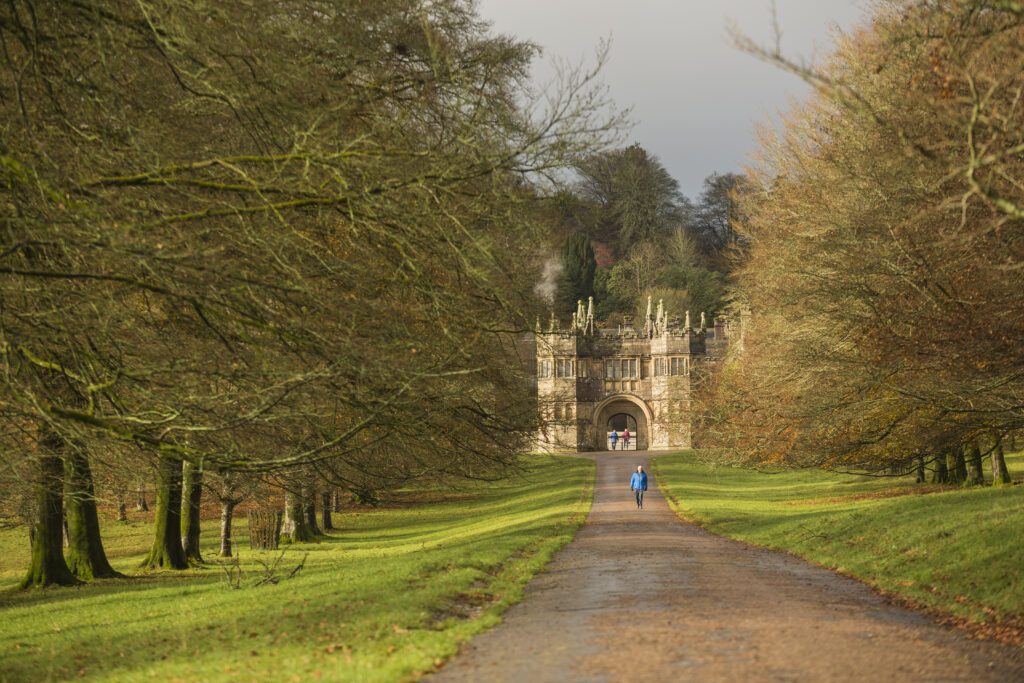
Meanwhile, the double lime tree avenue at Clumber Park in Nottinghamshire is flecked with gold. Winkworth Arboretum in Surrey the red maples and glossy leaves of the sweet gum trees have started to turn from bright green to red all over.
Similarly, at Biddulph Grange Garden in Staffordshire acers, azaleas and copper beech are following suit in the Rock Garden at Sizergh in Cumbria, the foliage is changing to fiery shades of oranges and yellows.
Autumn is also bringing with it a season of spectacular fungi. At Chirk Castle in North Wales, rare Waxcap fungi are emerging in the ancient grasslands. And, if damp conditions continue, it’s predicted to be a good year for the jewel like fungi.
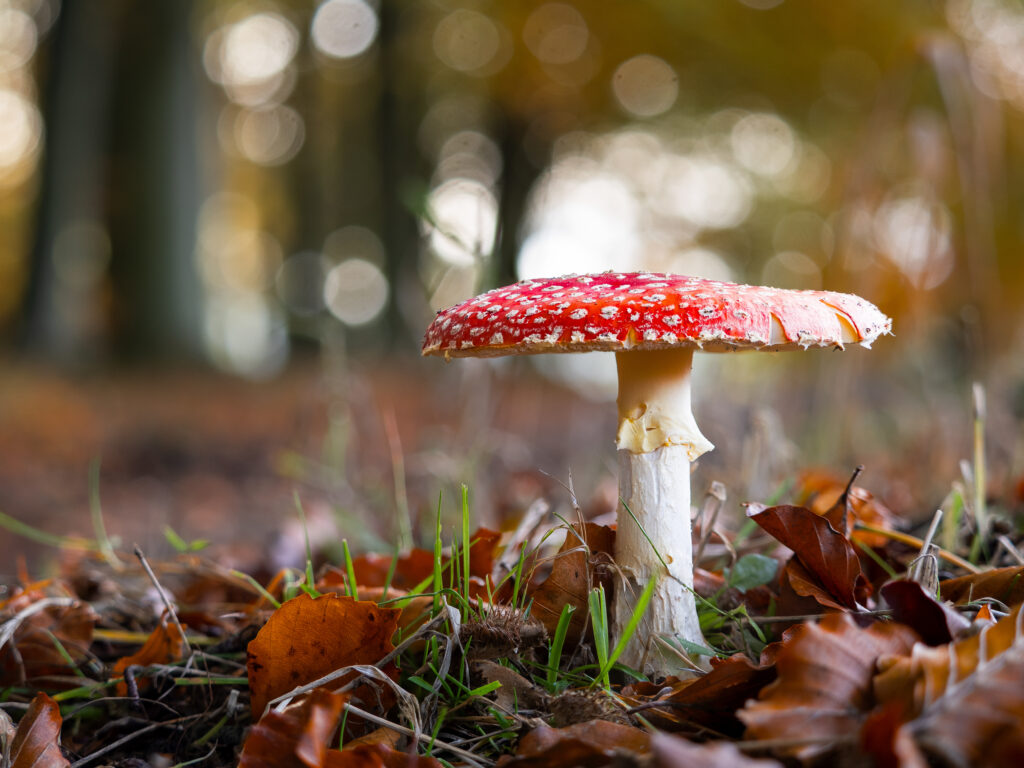
In Herefordshire on the Brockhampton estate, fly agaric, shaggy parasols and sulphur tuft fungi hide in the leaf litter.
Last to respond to the seasonal shift will be the magnificent oak trees, with canopies of russet brown leaves often lasting well into November.
In the Lake District the Atlantic oakwoods of the newly designated Borrowdale Rainforest National Nature Reserve will take on tawny and auburn colours towards the end of October, as will the veteran oaks in the parkland at Kedleston Hall in Derbyshire.
‘The spectacle of nature in autumn’
‘No matter how this season unfolds, we are already seeing signs that things are getting underway around the country, whether that’s in a city, town or in the countryside,’ says Pamela.
‘Look out for crimson creepers that coat garden fences, bright red berries appearing on hawthorn hedges and the leaves on tree lined streets falling to create their beautiful multi-hued carpets. The spectacle of nature in autumn can be enjoyed wherever you are.’