Helping recovery efforts following typhoons and earthquakes
A Cornish based international disaster relief charity talks about its support for families in the Philippines which are recovering from a series of powerful typhoons and earthquakes. The events left tens of thousands of people without homes.
ShelterBox teams have just completed assisting with three overlapping emergencies. The first response followed Typhoon Bualoi (locally known as Opong). It struck just hours after the strongest global storm of 2025.
Just days later, the deadliest earthquake in more than a decade hit Cebu. The situation worsened when the region was hit by Typhoon Kalmaegi (Tino).
The charity has responded in the Philippines more than 35 times and works with local partners to support people most in need.

It has a permanent team in Cebu and a warehouse stocked with essential items like shelter repair kits, solar lights, mosquito nets, blankets and hurricane strapping.
ShelterBox, working alongside local partner FACE Inc., was supporting thousands of people on Masbate Island whose homes were destroyed by Typhoon Bualoi.
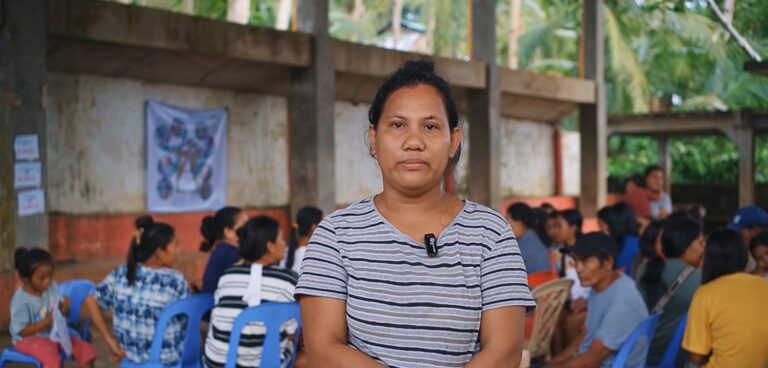
‘The sea is very calm but around 3am onwards it’s getting stronger. I don’t know what to do. We thought, if there was water, maybe we would die,’ says 66 year old Tita who was one of the many residents evacuated from the area.
‘Good thing it’s low tide. It was really scary. When we get home the roofs are gone.’
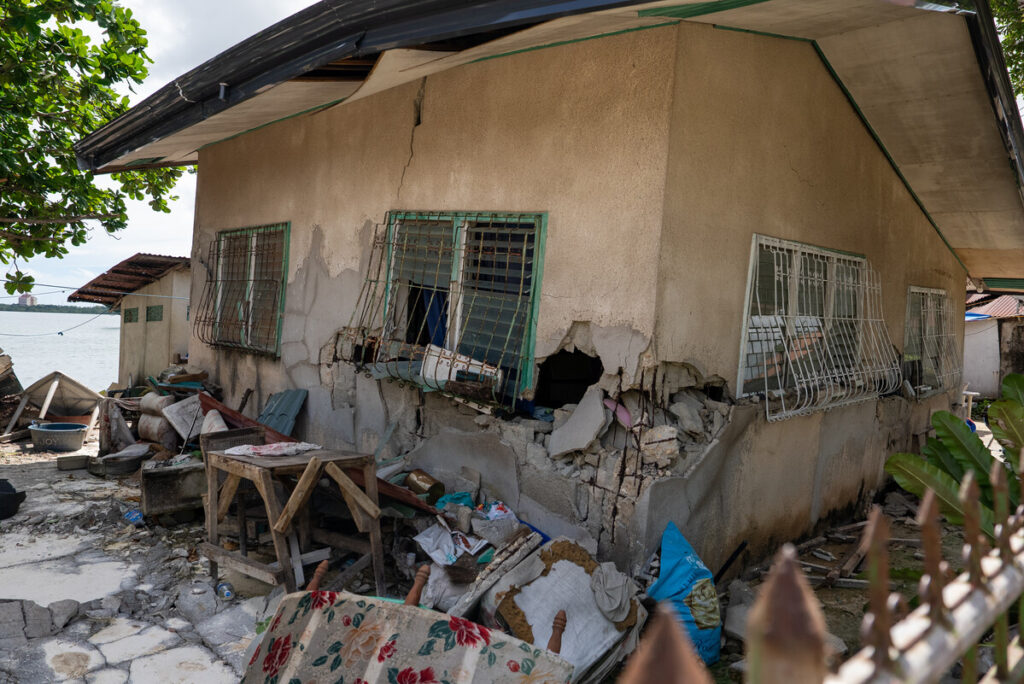
Homes were left damaged after the earthquake in Cebu. Image provided by ShelterBox.
‘We had nowhere to live’
Other residents reported how the storm quickly destroyed homes and belongings – leaving them at the mercy of the elements and thankful for the international response which provided them with food and shelter.
‘It was depressing because when I saw our house it was ruined. You can’t sleep there anymore. At that time we were in the evacuation centre and when we returned home, we had nowhere to live,’ explains 29 year old Jinky.
On the ground help means a significant number of displaced people are able to receive cash assistance, solar lights and hurricane strapping to strengthen homes.
‘Working this way means families have the flexibility to choose what works best for them, whether it’s buying corrugated iron or tarpaulins, or hiring help to rebuild,’ says Melinda Marie Buensuceso, at ShelterBox Operations Philippines.
‘Hurricane strapping might look simple, but it’s incredibly effective and affordable. For just a few pounds, these straps can make a huge difference in keeping roofs secure during high winds. It’s a small item that saves homes – and lives.’
At the same time, ShelterBox teams responded to the earthquake in Cebu. Thousands of people received shelter repair kits and essential items.
Families relocating from no-build zones were supported with corrugated iron sheets, hurricane strapping, and cash to help hire skilled labour for transitional shelters.
People already adversely affected by the earthquake were then impacted by Typhoon Kalmaegi.
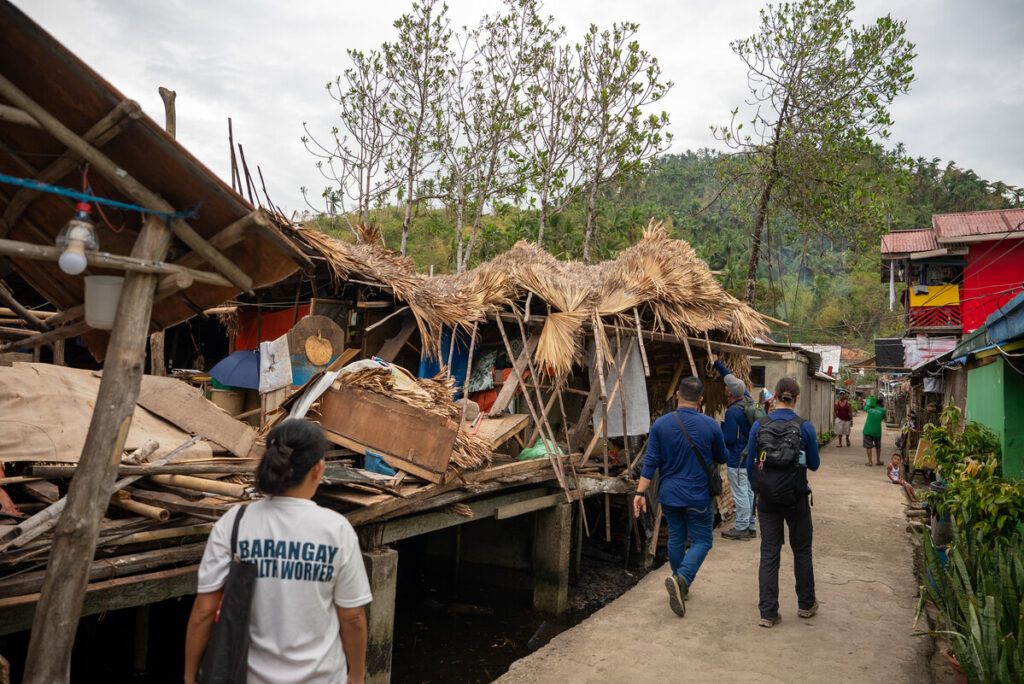
A team from ShelterBox assessing the damage after Typhoon Bualoi. Image provided by ShelterBox.
‘Being ready is vital’
ShelterBox supported 5,000 people with tarpaulins and tool kits to make urgent repairs and keep homes watertight. Distributions were led by the Rotary Club of Cebu, with support from Rotary District 3860, ShelterBox, and local Rotaractors and Interactors.
‘We were able to respond to three disasters simultaneously because of our supporters who, with every donation, make sure our warehouses are fully stocked and ready for the next emergency ahead of time,’ says Melinda.
‘It’s a matter of when, not if, the next disaster will hit – so being ready is vital.’
Since its founding in 2000, ShelterBox has supported more than three million people across around 100 countries with shelter and essential items.
The charity is currently supporting displaced communities in some of the world’s most overlooked crises, including Cameroon, Burkina Faso, Mozambique, Ethiopia, and Somalia.
