
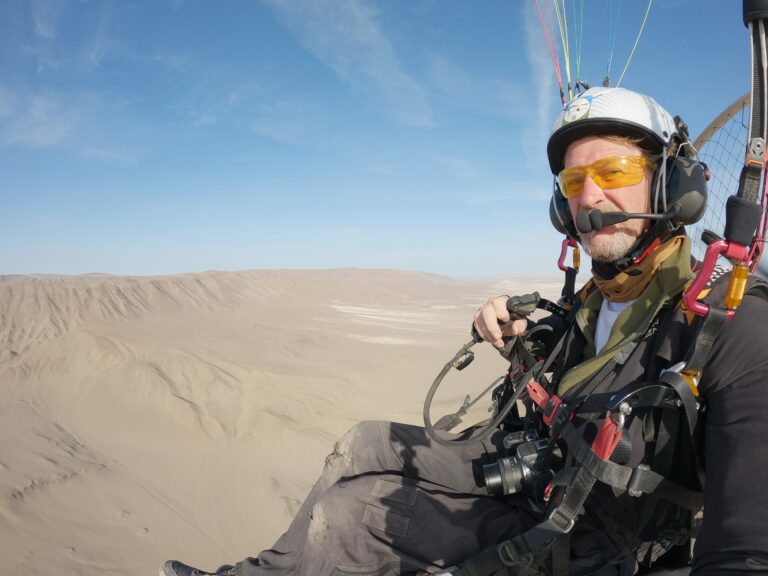
Botanists use motors and parachutes to collect threatened plant species
It’s the sort of thing you’d expect to see strapped to the back of Ethan Hunt or James Bond. A large motor with a big parachute like wing to allow the pilot to take to the skies and easily land before undertaking a mission of critical importance.
Well, for a team of botanists working in South America, their mission is of the upmost urgency as they soar across the remote Peruvian desert to collect threatened plants.
For them, the ‘flying wings’ will allow them to quick reach delicate and inaccessible desert ecosystems for urgent conservation.
It’s also seen as an environmentally friendly alternative to off-road vehicles and might even inspire the next generation of botanists.

Scientists from Kew’s Royal Botanic Gardens and Huarango Nature are working with a team of ‘para-motorists’ from Forest Air.
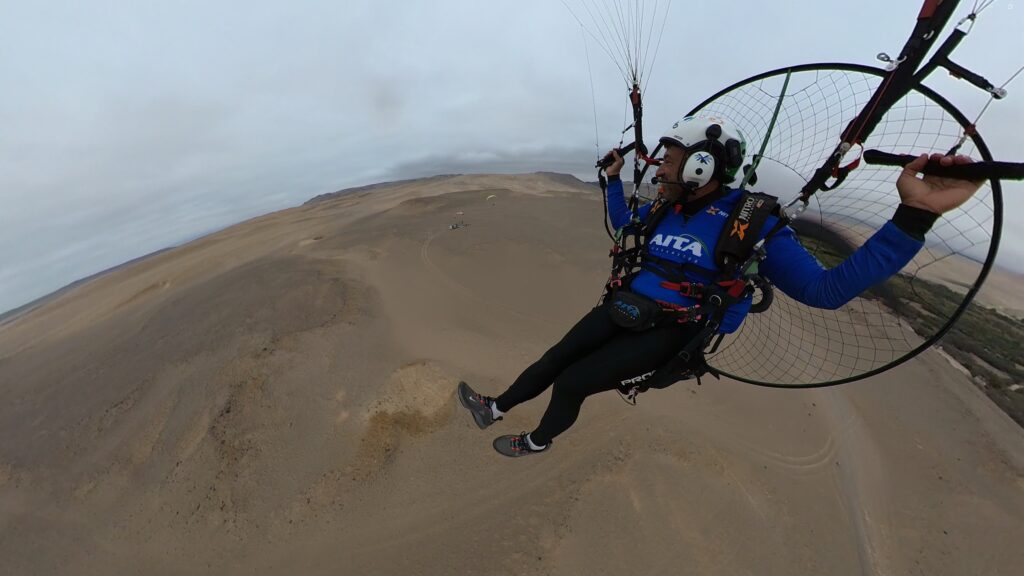
The para-motorist team consisted of three pilots and one ground crew engineer. Image copyright: Marcio Aita Junior (provided by RBG Kew).
They explain that using the airborne equipment is a faster and more environmentally friendly alternative to four by four off-road vehicles – including motorbikes.
It means they can easily each outlying areas and reduce their CO2 emissions by up two-thirds. They also emphasise that the use of the para-motoring wings will ensure ‘negligible damage to the fragile desert fog habitats and unexplored biological crusts.’
They recently produced a paper which outlines the results of a challenging expedition to the coastal fog deserts of Peru, where Kew scientists, with the support of a National Geographic Explorers grant, teamed up with professional para-motorists.
Their goal was to explore and collect plants in areas where humans have yet to collect and survey plants.
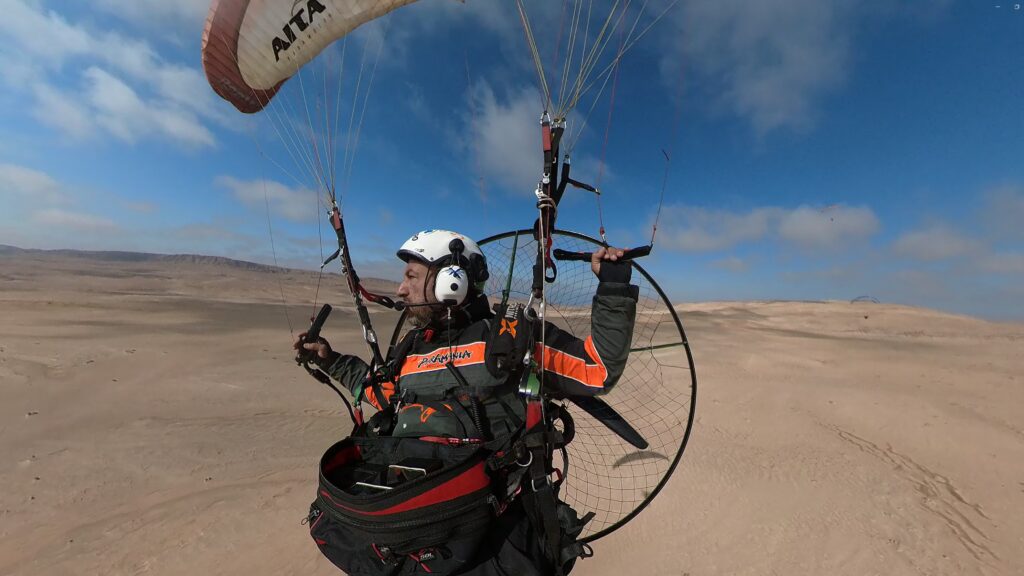
‘This was a unique experience that will never be forgotten’ says Márcio Aita Júnior, Director AITA Escola Nacional de Paramotor. Image copyright: Marcio Aita Junior (image provided by RBG Kew).
Dual crisis: climate change and biodiversity loss
They explain that being faced with the dual crises of climate change and biodiversity loss, scientists are expanding the arsenal of tools at their disposal in a race against time to describe and protect plants and habitats threatened with extinction.
Key to success in this race is the ability to conduct fieldwork to collect plant specimens, study populations, and delineate the geographic distribution of plants and their ecosystems.
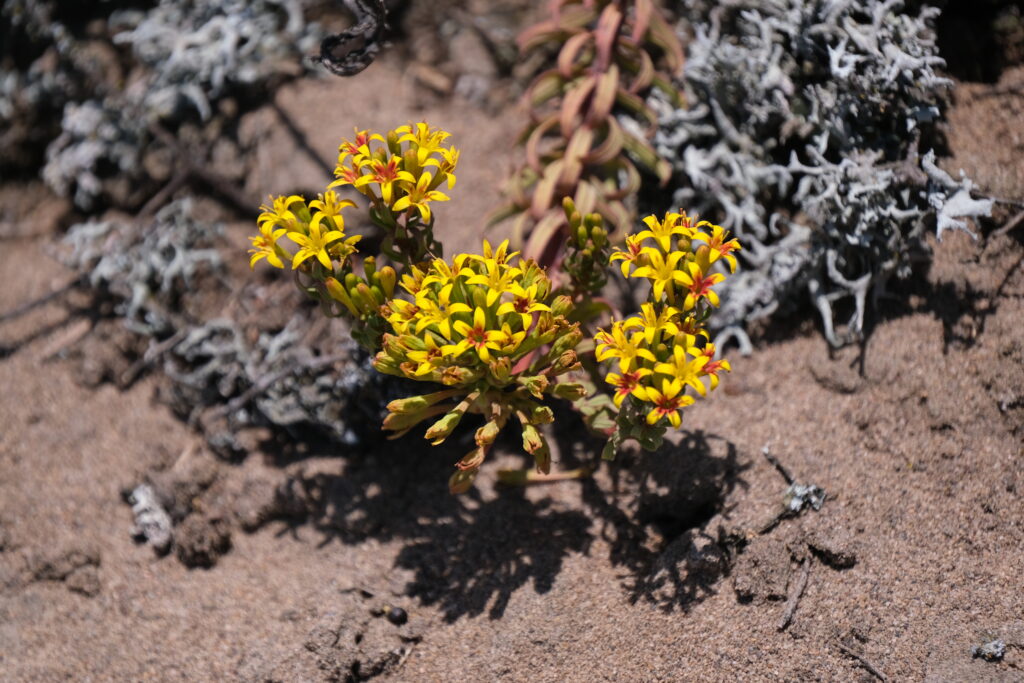
Key to success is the ability to conduct fieldwork to collect plant specimens. Image: Oliver Whaley (provided by RBG Kew).
But what happens when scientists are unable to reach certain locations, or the time-saving benefits offered by off-road vehicles are overshadowed by the huge impact they can have on the environment?
This was the dilemma during a 2022 expedition to Peru’s fog oasis desert led by a team from RBG Kew in partnership with the Peruvian conservation group Huarango Nature and funded by the National Geographic Society.
Fog oases are a rare and unique island-like ecosystem in South America that stretch some 3,000 km along the Pacific coast of Peru and Chile.
With virtually no rainfall to speak of, the desert’s many endemic species of plants have adapted to the harsh conditions by relying on moisture from the fog sweeping in from the Pacific.
Known as ‘lomas’ in Peru or ‘oasis de niebla’ in Chile, these ecosystems are home to more than 1,700 plant species and are extremely vulnerable to climate change and human activities.
Kew scientists have been studying them for almost a century and yet they remain incredibly hard to map and, in some areas, only flourish once every decade.
‘Unique and beautiful ecosystems’
‘The lomas are incredibly unique and beautiful ecosystems that are sustained by seasonal fogs rolling in from the Pacific,’ explains Dr Carolina Tovar, RBG Kew.
‘Each year, they witness a spectacular transformation when the bare desert landscape flowers during the lomas season.’
‘But despite being centres of plant endemism, hosting crop wild relatives and medicinal plants, there is still so much we don’t know about their ecology, which is fundamental for developing conservation efforts.’
Scientists were concerned about the environmental impact for what type of transport they’d use to get there.
Their worries centred around surface damage and creating ‘tyre marks that will linger for potentially hundreds of years.’ They also noted tyre tracks may encourage more exploration of an unspoilt area.
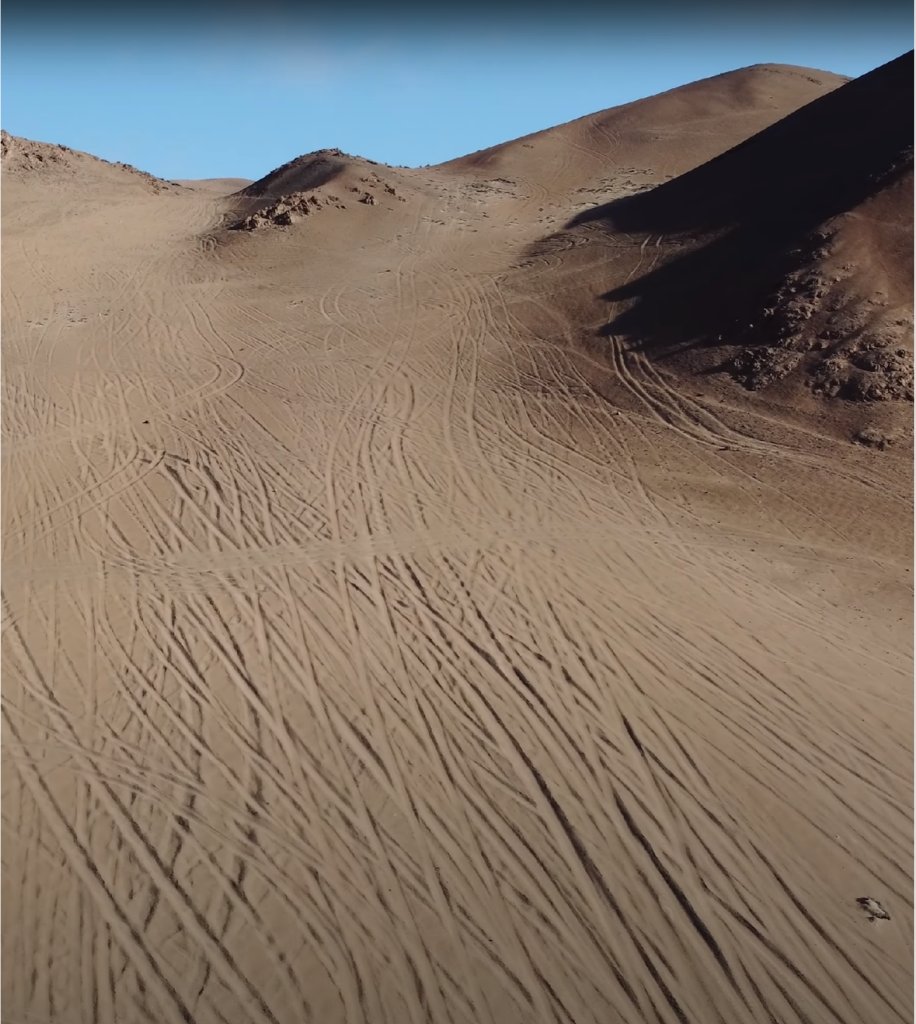
Tyre marks can linger for ‘potentially hundreds of years.’ Image: Justin Moat / Copyright: RBG Kew.
To study the feasibility of working around this problem, Kew’s scientists partnered with the French non-profit Forest Air and the Brazilian paramotor team Aita (Escola Nacional De Paramotor).
The para-motorist team consisted of three pilots and one ground crew engineer. The para-motorists were trained by Kew and Huarango Nature scientists on how to identify target plant species and how to collect, geo-reference and preserve them for study.
‘This was a unique experience that will never be forgotten, helping me understand a little about botany and lomas and their role in society, also it helped me to understand plant studies and their importance to the discovery of new medicines and food for the next generation,’ says Márcio Aita Júnior, Director AITA Escola Nacional de Paramotor.
‘I was absorbed by the information, drawing me into local culture, and with certainty this experience changed my perception of the world and the importance of preserving nature as a whole.’
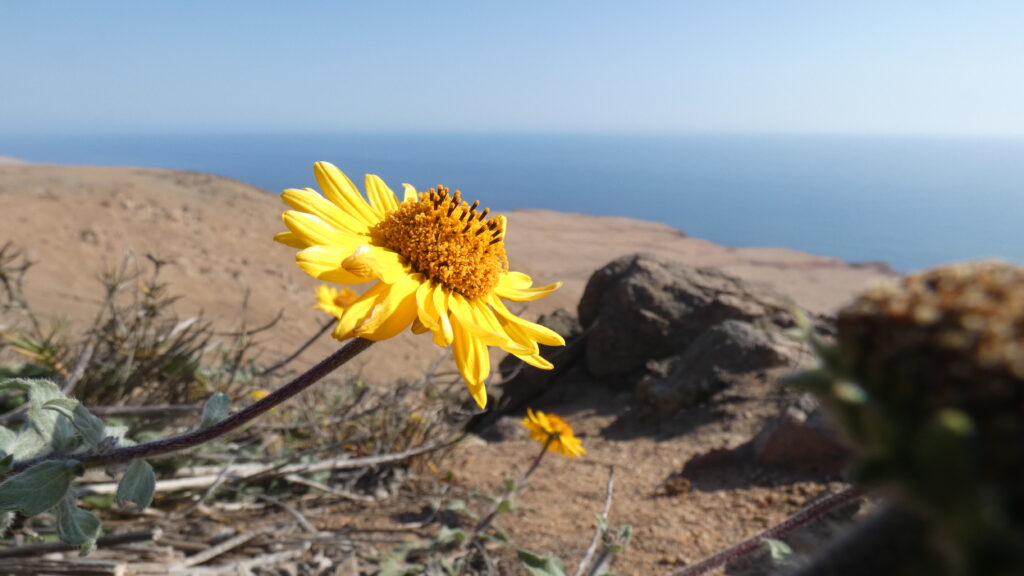
‘The importance of preserving nature as a whole.’ Image: Jean Capcha-Ramos (provided by RBG Kew).
Covering 300 miles by land and air
The expedition expenditure could only extend to seven intensive days in November 2022. The scientists covered approximately 300 miles by land and air.
The team surveyed huge areas which covered nearly 40,000 acres. It allowed them to focus their research efforts on specific plant types.
‘It was simply wonderful to bring the scientists and the pilots together,’ says Mike Campbell-Jones, Forest Air president and co-founder.
‘To put theory into practice and finally have the chance to prove the combination for what it truly is – a valuable new tool for science and the many important tasks ahead.’
‘As a pilot, with many years’ experience, flying and directing competitions around the world, I must say, I have never been so motivated on a mission task or learned as much about our planet as seeing one of its most fragile ecosystems through the eyes of a scientist.’
‘The flights we made on this expedition as the Forest Air team were the most memorable of my long and colourful life.’
The scientists were keen to see how paramotoring would compare to the ground team’s work across a typical range of plant survey activities.
Their objectives included: measuring the respective damage to desert surface ecology and reconnaissance flights to identify plant populations.
They were also monitoring for threats and clandestine human activity, surveying the landscape through aerial photography and collecting plant specimens.’
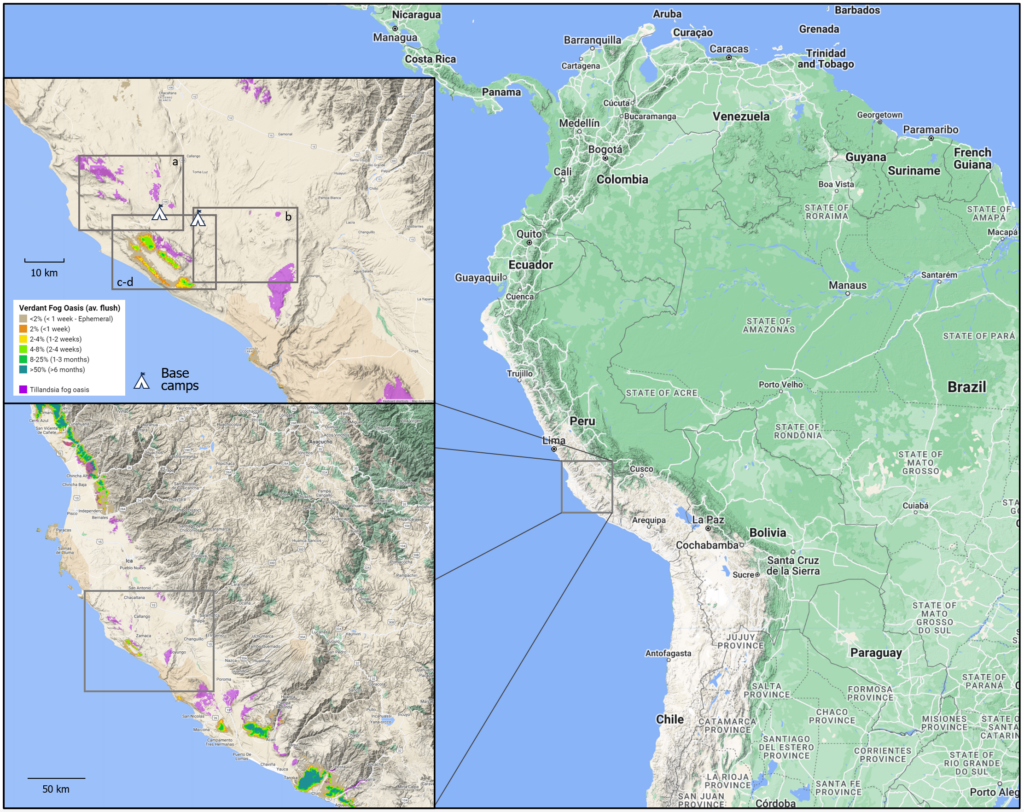
Flights covered distances of up to 17 miles. Location map image: Justin Moat / Copyright: RBG Kew.
Longest mission lasted more than two hours
In some cases, flights covered distances of up to 17 miles with the longest mission lasting just over two hours.
On average, they completed their missions 4.5 times faster than the ground crews and for longer missions it was estimated it would be up to 10 times faster.
Moreover, para-motorists were able to survey huge areas, targeting and imaging specific regions not distinguished by drones or UAVs.
Scientists say another important ‘measure of success’ was looking at the greenhouse emissions of both the para-motorists and the ground teams.
On shorter ventures into the desert, the CO2 emissions were roughly equivalent, but in the longer missions the ground team produced three times more CO2 than the flying teams.
They say the para-motorists excelled in terms of their negligible impact on the fragile desert surface, causing minimal damage by leaving only a few footprints on landing and take-off.
Conversely, they found that 4×4 vehicles ‘damage an area equivalent to a football pitch for every five kilometres driven and in fragile conditions for every one kilometre driven.’
The paper highlights the track compounded off-road vehicle tyre damage is far reaching, even able to cause dust storms, damage archaeology and destroy ecosystems and biodiversity.
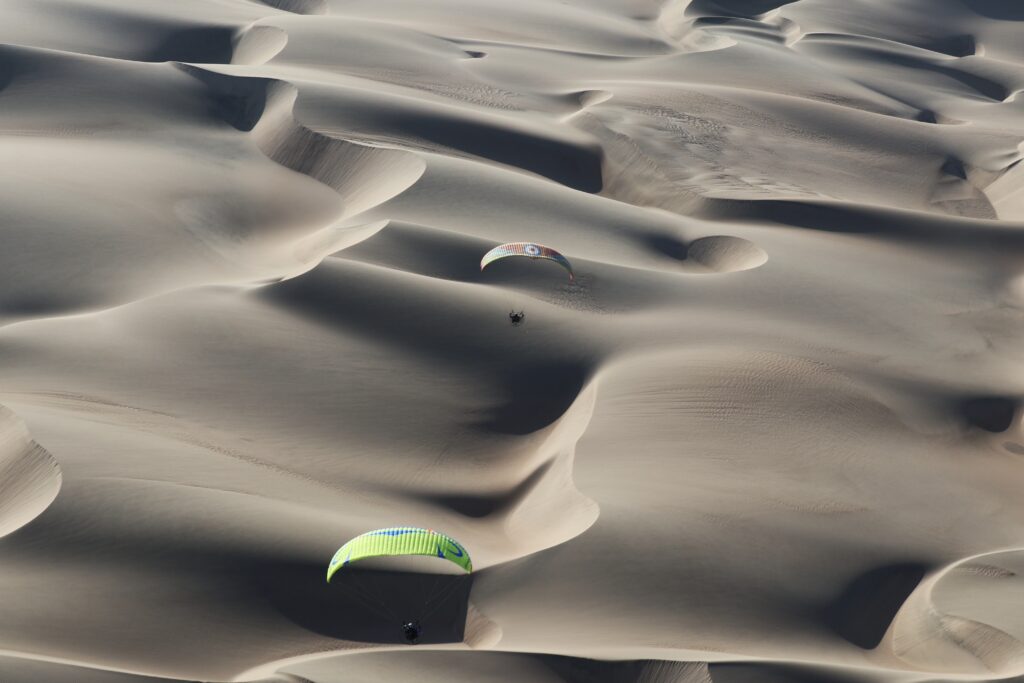
Photograph shows Márcio Aita Júnior and Senderson Laurido over the desert. Image: Mike Campbell-Jones (provided by RBG Kew).
‘Unique and exciting’
‘This study was a unique and exciting experience for everyone involved; for many years we have attempted to reach some suspected large areas of endemic vegetation in the Peruvian desert,’ explains Dr Justin Moat, Senior Research Leader at RBG Kew and National Geographic Explorer.
‘(We) found it very difficult to access without major damage to the desert surface using 4x4s, due to the harsh desert conditions and soft shifting sands.’
‘To overcome this challenge, we would have had to mount a major expedition, probably lasting weeks.’
‘Meanwhile, the para-motorists had flown great distances and returned with plant specimens and aerial photographic evidence of the vegetation within the space of two hours.’
The researchers say they’re hopeful that their findings will help other scientists conduct fieldwork in environments that are too remote to access by normal means or otherwise extremely sensitive to human activities such as off-road driving.
They also believe this novel approach to fieldwork will help inspire an interest in botanical science among a new generation.
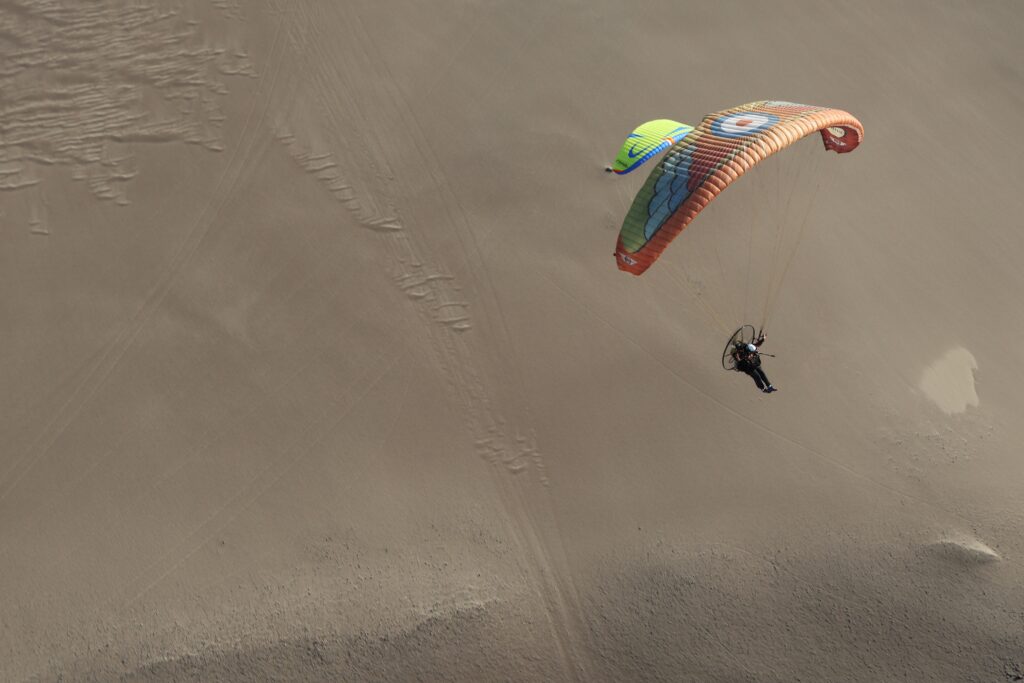
Mid-air photograph shows Márcio Aita Júnior and Senderson Laurido. Image: Mike Campbell-Jones (provided by RBG Kew).
Plants: ‘our lives depend on them’
‘Plants are often ignored or outright taken for granted when we think about wildlife conservation, which is unfortunate as every single aspect of our lives depends on them,’ says Oliver Whaley, Honorary Research Associate at RBG Kew.
‘The planet is in serious trouble and with botanical sciences facing a precipitous decline just when we need it most, we have to think of new ways in which we can inspire people to take action.’
‘Our study shows that through an exciting and multidisciplinary collaboration, today’s extreme sports enthusiasts can work alongside scientists to help monitor ecosystems, and with some basic training, gather crucial environmental data, protect species and aid conservation efforts.’
‘By engaging local and international adventurers in our scientific work, we’re not only empowering them to take nature-positive action, but helping to safeguard our amazing planet – our Pachamama!’
Earlier this year saw a large area of lomas being declared as a reserve for conservation. The reserve, which is home to many rare and threatened native species, has been mostly untouched by human activity.
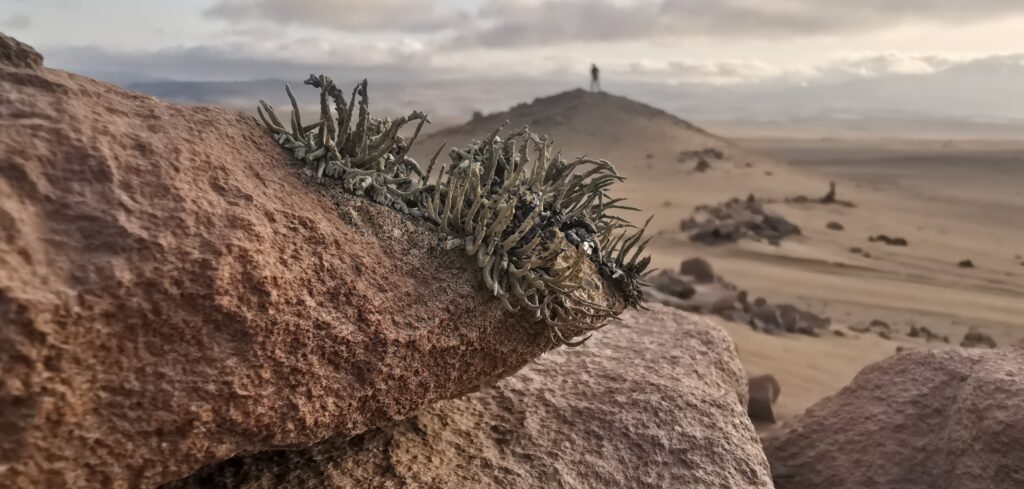
Lichens with part of the survey team taking measurements in the distance. Image: Justin Moat (provided by RBG Kew).
Experts warn that recent years have seen the encroachment of urban development, off-road driving, windfarms and mining. It is now protected with an official ‘Concession for Conservation’ (only 4% of the lomas across Peru and Chile are under protection).
This unique site will now be managed by Huarango Nature in partnership with Kew and local communities and organisations, including the Peru National Forestry and Wildlife Service (SERFOR).
Other recent airborne surveys involving scientists from RBG Kew saw drones being used to help curb illegal deforestation in Madagascar’s biodiverse forests. Scientist Jenny Williams focused her research on a humid forest in the southeast of the island.