
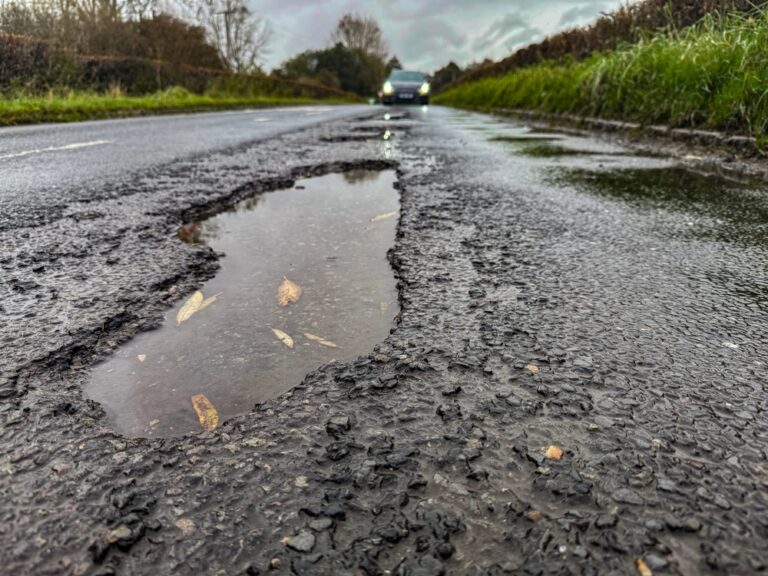
Figures show increase in pothole related problems in just one year
The RAC is releasing figures showing the number of drivers falling foul of potholes and breaking down rose by 25% between July and September when compared to the same period last year.
The organisation says it attended 5,035 pothole-related breakdowns this summer for jobs such as broken suspension springs, distorted wheels and damaged shock absorbers – that’s up from 4,040 during the same months in 2024.
It adds that this year’s figure are significantly higher than the average number of these types of breakdowns typically recorded during the warmest months (4,372).
The analysis shows that over the 12 months to the end of September 2025, drivers were direct victims of potholes on a total of 25,758 occasions – an 11% rise on 23,147 during the same period a year earlier.

The RAC says its results are a concerning ‘early warning sign’ ahead of the generally colder, wetter months to come. On average, the RAC attended 71 pothole-related breakdowns a day over this period – up from 68 a day over the previous 12 months.
‘Confirmation that more drivers fell foul of potholes this summer compared to last is troubling,’ says Simon Williams, RAC Head of Policy.
‘If nothing else, it underlines the gargantuan task of getting the roads that millions of people rely on back to a respectable standard after years of neglect.’
‘Every pothole breakdown means hassle, frustration and ultimately cost for drivers – up to £590 for anything worse than a puncture. For those on two wheels, they’re an out-and-out danger.’
RAC research shows the condition and maintenance of local roads remains a top motoring concern for the nation’s drivers.
‘The tide might finally be turning’
The survey shows that 47% of respondents said the state of local, council-run roads is their top bugbear for 2025. On the upside, the figure is down from 56% last year.
And while six-in-10 UK drivers (59%) say the local roads they drive on are in a worse state this year than last, this is down sharply on the 73% who said the same in 2024.
What’s more, the proportion of drivers that say these roads are in a better condition has reached 12% this year – double last year’s 6%.
Taken together, these figures suggest drivers feel the ‘rot’ has perhaps been stopped when it comes to the state of these roads.
But despite this, three-in-10 drivers (29%) still said their vehicles had suffered from pothole-related damage over a 12-month period.
‘But the tide might finally be turning. Despite the disappointing breakdown figures, a small but growing proportion of drivers tell us their local roads are in a better state than 12 months ago,’ says Simon Williams.
‘The Government is also applying pressure on councils to do the right thing when it comes to maintaining the roads, requiring each authority in England to set out precisely what preventative maintenance it has done and plans to do – something we have long called for.’
‘As a country, we’re a long way off having the roads that everyone deserves. But we hope the rot has at least been stopped, and that new multi-year funding settlements give local authorities the certainty they need to plan and deliver better road maintenance programmes.’
‘Treat these roads the following summer’
‘This will not only fix the roads that are in a desperate state, but prevent future potholes from appearing in the first place.’
Organisations have long argued that a key solution to Britain’s broken roads is for local authorities to carry out more preventative maintenance.
The treatments include surface dressing which aim to keep roads in a better condition for longer – reserving resurfacing for the very worst roads that are beyond reasonable repair.
Figures previously analysed by the RAC show only a small proportion of roads have received any form of preventative maintenance treatment in recent years.
The RAC says New multi-year funding from central Government gives councils the opportunity to finally change that. The Government is also now requiring councils to show how much preventative maintenance they are carrying out.
‘It’s important highway authorities consider using cost-effective preventative maintenance treatments on roads that are currently in good condition, to keep them that way for longer,’ says Mike Hansford, Chief Executive, Road Surface Treatments Association.
‘We’d also encourage them to repair potholes and other damage as permanently as possible and, where appropriate, treat these roads the following summer to stop water getting in and causing further damage.’
‘Using cost-effective preventative maintenance treatments’
‘On extensively potholed roads, where replacement is required, they can even save money by recycling the existing materials into the new road.’
‘Highway authorities that adopt these practices report some of the best condition roads in the country and some of the lowest numbers of potholes per mile of network.’
Breaktime News has previously reported on RAC data which found there were 9000+ pothole related breakdowns in first three months of 2025.
